Edward Burnett Tylor
English anthropologist (1832-1917) · United Kingdom · Academics · Died at 84
Edward Burnett Tylor is read about 191 times a day, in 49 languages.
A typical day, 30 days to 16 September 2026
The middle day of the days counted, so one week of news cannot move it. The line under it is the last 60 days, one point a day.
Something wrong?He coined the term that named humanity's oldest impulse - animism, the belief that souls inhabit everything - and built the scaffolding on which modern anthropology still stands, even as it rejects his Victorian certainty that all cultures climb the same ladder from "savagery" to "civilization."
Also in Deutsch
Photos 4


Awards
In their orbit
About this person
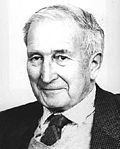
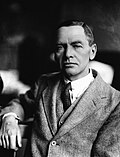
Edward Burnett Tylor was born on 2 October 1832 and became the English professor who gave anthropology its scientific form. Drawing on Charles Lyell's evolutionary theories, he published Primitive Culture in 1871 and Anthropology in 1881, works that defined the discipline's scope and method for the nineteenth century. He proposed that all societies moved through three stages - savagery, barbarism, civilization - a framework that reflected his era's faith in universal progress. He reintroduced "animism" to describe what he saw as religion's first phase: the belief that souls animate all things and natural forces. Tylor thought studying human history and prehistory could guide the reform of British society itself. He died on 2 January 1917, a founding figure whose evolutionary lens shaped the field even as later anthropologists dismantled his hierarchies.
Academics from the United Kingdom 6



Fame.am measures public visibility signals. It does not measure human value, talent, morality, or credibility.