David Ricardo
British economist and politician (1772-1823) · Academics · Died at 51
David Ricardo is read about 785 times a day, in 85 languages.
A typical day, 30 days to 15 October 2026
The middle day of the days counted, so one week of news cannot move it. The line under it is the last 390 days, one point a day.
Something wrong?He built a fortune on government debt, then spent his final years arguing that the policies enriching men like him were strangling the economy.
A life in dates
Also in Deutsch
Photos 8
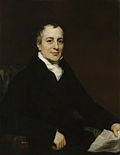
 Portrait of David Ricardo by Thomas Phillips
_(cropped).jpg?width=1200) Portrait of David Ricardo by Thomas Phillips (cropped) (cropped)
Portrait of David Ricardo by Thomas Phillips (cropped) (cropped).jpg?width=1200) Portrait of David Ricardo by Thomas Phillips (cropped)
Portrait of David Ricardo by Thomas Phillips (cropped) Beispiel für das Ricardo-Modell
 Beispiel zum Ricardo-Modell
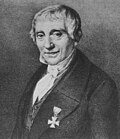
.jpg?width=1200) David Ricardo (colorized)
David Ricardo (colorized).jpg?width=1200) David Ricardo (grey)
David Ricardo (grey).jpg?width=1200) David Ricardo - On the principles of political economy and taxation (1817, title)
David Ricardo - On the principles of political economy and taxation (1817, title)In their own words 10
 ,
, Utility then is not the measure of exchangeable value, although it is absolutely essential to it.
Possessing utility, commodities derive their exchangeable value from two sources: from their scarcity, and from the quantity of labour required to obtain them.
The wheat bought by a farmer to sow is comparatively a fixed capital to the wheat purchased by a baker to make into loaves.
Family
Is this everyone?
Only relatives with a profile here are drawn, so a family can be larger than this. A line here can also be wrong.
Correct this familyAbout this person
Born in 1772 to a Sephardic stockbroker in London, Ricardo broke with his family at 21 when he eloped with a Quaker and converted to Unitarianism. He made his wealth financing government borrowing, retired to Gloucestershire, and entered Parliament as MP for Portarlington. There he fought the Corn Laws and protectionism, convinced that free trade lowered prices and lifted nations. He wrote his first economics article at 37, fixing gaps in Adam Smith's labor theory and developing his own frameworks for rent, wages, and profits. His theory of comparative advantage - that even weaker economies gain from trade by specializing where they're least inefficient - became the cornerstone argument against mercantilism. He died at 51 in 1823 from an ear infection that turned septic, leaving a fortune and a doctrine that would eventually become British policy.



Fame.am measures public visibility signals. It does not measure human value, talent, morality, or credibility.