Chinua Achebe
Nigerian novelist, poet, professor, and critic (1930-2013) · Nigeria · Writers · Died at 82
Chinua Achebe is read about 731 times a day, in 91 languages.
A typical day, 30 days to 23 October 2026
The middle day of the days counted, so one week of news cannot move it. The line under it is the last 398 days, one point a day.
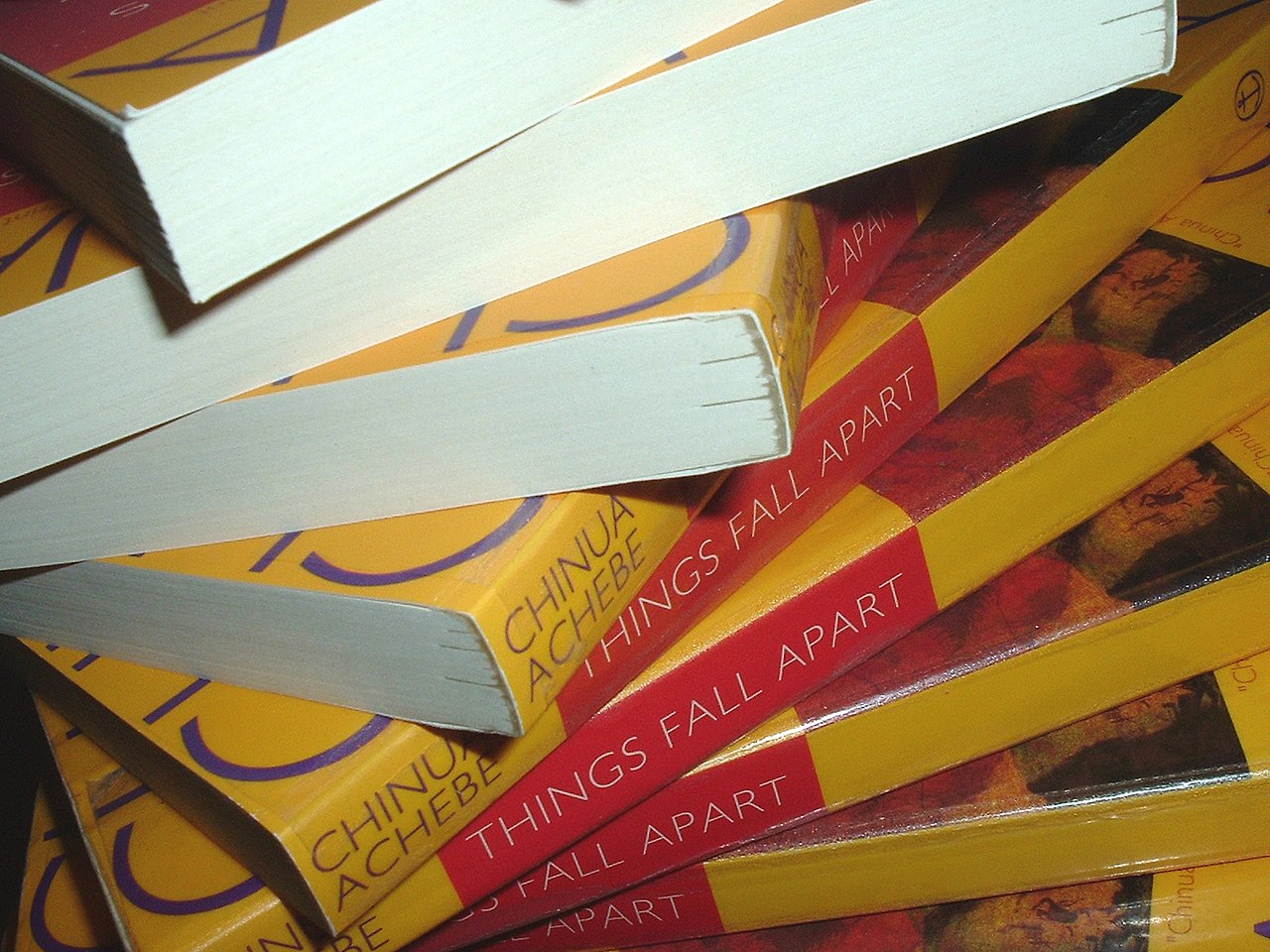
Something wrong?Things Fall Apart sold over twenty million copies and became the most widely read African novel ever written - not because it flattered the West's gaze, but because Achebe dismantled it. He gave Igbo life its own voice in English and forced the canon to make room.
A life in dates
Also in Deutsch
Photos 6




Awards
Family
 Chinua Achebe
Partners
Children


Is this everyone?
Only relatives with a profile here are drawn, so a family can be larger than this. A line here can also be wrong.
Correct this familyAbout this person
Born in Ogidi in 1930 under colonial rule, Albert Chinụalụmọgụ Achebe grew up between Igbo tradition and missionary Christianity, then studied at what is now the University of Ibadan, where he turned fiercely against the way Western literature depicted Africa. After graduation he worked for the Nigerian Broadcasting Service in Lagos, and in 1958 published Things Fall Apart - the first in what became the African Trilogy, completed by No Longer at Ease (1960) and Arrow of God (1964). At Heinemann he launched the African Writers Series, galvanizing careers like Ngũgĩ wa Thiong'o and Flora Nwapa, and defended writing in English as a way to reach the widest audience. When Biafra broke from Nigeria in 1967 he became an ambassador for the breakaway region, appealing to Europe and the Americas as civil war ravaged the population; after Nigeria retook Biafra in 1970 he grew disillusioned with the corruption he saw in political life. A 1990 car crash left him partially paralyzed, and he spent his final decades teaching in the United States - nineteen years at Bard College, then at Brown University, where he held the chair in African studies until his death in 2013.


Fame.am measures public visibility signals. It does not measure human value, talent, morality, or credibility.