Wole Soyinka is read about 557 times a day, in 98 languages.
A typical day, 30 days to 15 October 2026
The middle day of the days counted, so one week of news cannot move it. The line under it is the last 390 days, one point a day.
Something wrong?The first African awarded the Nobel Prize in Literature, handed to him in 1986 for work the Swedish Academy called a drama of existence with poetic overtones. His plays, novels, and poems pull from Yoruba tradition and Nigeria's fractured political life - satire that lands because it's rooted.
A life in dates
Also in Deutsch
Photos 4


In their own words 10
 ,
Come January 20, 2017; watch my WOLEXIT" [http://www.independent.co.uk/news/people/nobel-prize-winner-wole-soyinka-donald-trump-throws-away-green-card-a7450141.html
For the fire consumes all but the arsonist.
Today, the constituency of fear has become much broader, far less selective.
Awards
Family
 Wole Soyinka
Partners
Is this everyone?
Only relatives with a profile here are drawn, so a family can be larger than this. A line here can also be wrong.
Correct this familyAbout this person
Akinwande Oluwole Babatunde Soyinka was born 13 July 1934 into an Anglican Yoruba family in Aké, Abeokuta. He studied at Government College, Ibadan, then University College Ibadan, where he co-founded the Pyrate Confraternity, before leaving for the University of Leeds. In England he edited the university magazine and began writing short stories and recording for the BBC, turning full-time author in the 1950s. Early plays like The Invention (1957), The Swamp Dwellers (1958), and The Lion and the Jewel (1959) were staged at the Royal Court Theatre and on Nigerian radio. Novels followed - The Interpreters (1965), Season of Anomy (1973) - alongside poetry collections, memoirs, and the play Death and the King's Horseman, all threaded with Nigeria's history and his own satirical edge. In July 2024, on his 90th birthday, President Bola Tinubu renamed the National Arts Theatre after him.
In common with Wole
 Joke SilvaAlso in Elesin Oba: The King's Horseman (2022)
 Tunde KelaniAlso in Ebrohimie Road: A Museum of Memory (2024)
 Tyrone SavageAlso in Death and the King's Horseman (2023)
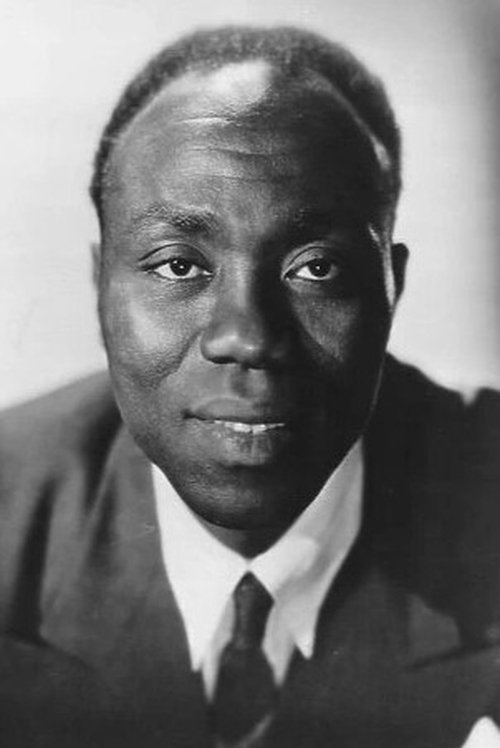 Orlando MartinsAlso in Kongi's Harvest (1970)
 Allan KingAlso in Joshua: A Nigerian Portrait (1963)
 Odunlade Jonathan AdekolaAlso in Elesin Oba: The King's Horseman (2022)
Fame.am measures public visibility signals. It does not measure human value, talent, morality, or credibility.