Charles Thomson Rees Wilson
Scottish physicist and meteorologist (1869-1959) · United Kingdom · Scientists · Died at 90
Charles Thomson Rees Wilson is read about 55 times a day, in 87 languages.
A typical day, 30 days to 15 October 2026
The middle day of the days counted, so one week of news cannot move it. The line under it is the last 390 days, one point a day.
Something wrong?A physicist who made the invisible visible: Wilson built a device that let scientists see the fleeting tracks of subatomic particles for the first time, turning quantum theory from abstraction into something you could photograph.
A life in dates
Also in Deutsch
Photos 4


Awards
In their orbit
About this person
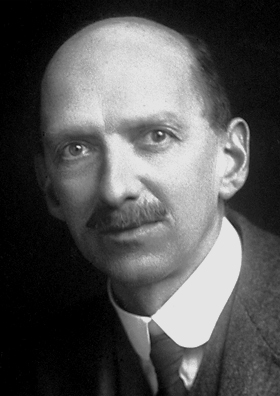
Charles Thomson Rees Wilson was born on 14 February 1869 in Britain, trained as a meteorologist and physicist, and spent years puzzling over how to capture what no one had seen. His invention - the cloud chamber - used vapor to reveal the paths of charged particles as they tore through space, trails of condensation marking where electrons and alpha rays had just been. The device became essential to atomic research, a way to witness the architecture of matter itself. In 1927 he shared the Nobel Prize in Physics with Arthur Compton for the work. He died on 15 November 1959.
In common with Charles


Scientists from the United Kingdom 2

Fame.am measures public visibility signals. It does not measure human value, talent, morality, or credibility.