Charles Gounod is read about 444 times a day, in 65 languages.
A typical day, 30 days to 15 October 2026
The middle day of the days counted, so one week of news cannot move it. The line under it is the last 390 days, one point a day.
Something wrong?He gave the world the opera Faust and an "Ave Maria" built on Bach that still plays at weddings and funerals.
A life in dates
Also in Deutsch
Photos 8
_by_Nadar.jpg?width=1200) Charles Gounod (1890) by Nadar
Charles Gounod (1890) by Nadar_C%C3%A9l%C3%A9brit%C3%A9s_du_XIXe_si%C3%A8cle._III_-_btv1b10525048m_(093_of_110).jpg?width=1200) (Recueil.) Célébrités du XIXe siècle. III - btv1b10525048m (093 of 110)
(Recueil.) Célébrités du XIXe siècle. III - btv1b10525048m (093 of 110) Aristide Cavaillé-Coll - Orgue de Salon Gounod
 Ch. Gounod, PA03995
 Charles Gounod & Ernest Hébert 1880
 Charles Gounod - Brun, Clément & Cie, d'après Carolus Duran - btv1b8420484p
.jpg?width=1200) Charles Gounod - btv1b10026664w (1 of 2)
Charles Gounod - btv1b10026664w (1 of 2) Charles Gounod - btv1b8420457s
Listen
SpotifyAlbums 23
 FCFauré: Requiem / Gounod: Messe de Clovis
 BSBizet: Carmen Suite no. 1 & Symphony no. 1 / Gounod: Petite Symphonie
 GSGounod: Faust Ballet Music / Bizet: Carmen Suite
Awards
Family


Is this everyone?
Only relatives with a profile here are drawn, so a family can be larger than this. A line here can also be wrong.
Correct this familyAbout this person
Born in Paris on 17 June 1818 into an artistic family, Gounod studied at the Conservatoire and won the Prix de Rome, which sent him to Italy, Austria, and Prussia, where he met Mendelssohn and absorbed Bach. Deeply religious, he briefly considered the priesthood after returning to Paris, then composed prolifically - church music, songs, orchestral works, operas. Faust in 1859 made him; Roméo et Juliette in 1867 kept him there. The Franco-Prussian War scattered him: he fled to England in 1870, sent his family home in 1871, but stayed in London under the roof - and the control - of Georgina Weldon, an amateur singer, for nearly three years before breaking free and returning to France. By then younger composers had moved past him; he remained respected but old-fashioned, operatic success gone. He died at his house in Saint-Cloud on 18 October 1893, age seventy-five, his influence on Massenet and Fauré outlasting his fame.
In common with Charles
 Plácido DomingoBoth received Royal Philharmonic Society Gold Medal
 Richard StraussBoth received Royal Philharmonic Society Gold Medal
 Yehudi MenuhinBoth received Royal Philharmonic Society Gold Medal
 Vladimir HorowitzBoth received Royal Philharmonic Society Gold Medal
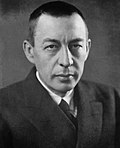 Sergei RachmaninoffBoth received Royal Philharmonic Society Gold Medal
Fame.am measures public visibility signals. It does not measure human value, talent, morality, or credibility.