Charles Glover Barkla
English physicist (1877-1944) · United Kingdom · Scientists · Died at 67
Charles Glover Barkla is read about 34 times a day, in 79 languages.
A typical day, 30 days to 21 October 2026
The middle day of the days counted, so one week of news cannot move it. The line under it is the last 396 days, one point a day.
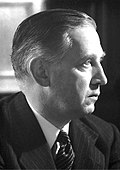
Something wrong?He proved X-rays weren't all alike - that each element scatters its own signature wavelength, a fingerprint in radiation that let physicists read matter without cracking it open.
A life in dates
Also in Deutsch
Photos 8


.jpg?width=1200)

.jpg?width=1200)
Awards
In their orbit
About this person
Charles Glover Barkla was born on 7 June 1877 in Britain, entering physics just as invisible rays were remaking the field. His experiments with scattered X-rays revealed something unexpected: different elements produced characteristic radiation at distinct wavelengths, turning X-rays into a diagnostic tool for identifying atomic structure. The work earned him the Nobel Prize in Physics in 1917. He continued research through the interwar years, though his later ideas drew less consensus. He died on 23 October 1944, his signature discovery long since woven into the fabric of experimental science.
Scientists from the United Kingdom 6


Fame.am measures public visibility signals. It does not measure human value, talent, morality, or credibility.