Cesária Évora
Cape Verdean singer-songwriter (1941-2011) · Cape Verde · Musicians · Died at 70
Cesária Évora is read about 621 times a day, in 68 languages.
A typical day, 30 days to 15 October 2026
The middle day of the days counted, so one week of news cannot move it. The line under it is the last 390 days, one point a day.
Something wrong?She sang morna - Cape Verde's blues of homesickness and longing - in bare feet, cigarette in hand between sets, carrying an island's sorrow to concert halls that had never heard it.
A life in dates
 Nha SentimentoAlbum, 20092006
 RogamarAlbum2004Victory of the album of traditional musics or musics of the worldAward2003Grammy Award for Best Contemporary World Music AlbumAwardVoz d'amorAlbum2001“Now I work, and I see the results of my work, so I have some money,” she says. “But I’m still the same person that I was before. I still have the same simple life.”In their words25 June 2001A Lifetime of Persistence Brings Cesaria Evora to World Stage,June 25, 2001,By ALONA WARTOFSKYSão Vicente di LongeAlbum2000Victory of the album of traditional musics or musics of the worldAward1999
 Café AtlanticoAlbum1997Kora AwardsAward
 Cabo VerdeAlbum, 19971995
 CesariaAlbum1992
 Miss PerfumadoAlbum1991
 Mar AzulAlbum1990
 Distino Di BelitaAlbum1988
 La Diva aux pieds nusAlbum1987
 CesáriaAlbum1941Born27 August 1941
Also in Deutsch
Photos 8
.jpg?width=1200)


In their own words 10
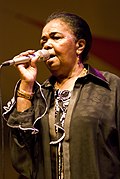 ,
, Now I work, and I see the results of my work, so I have some money,” she says. “But I’m still the same person that I was before. I still have the same simple life.
This was women’s work around the house, but I didn’t like it, so I came out when I was 13
The fact that I sing about love doesn’t have anything to do with my emotional life.
Listen
SpotifyOn YouTube
127K subscribersAlbums 13
 MCMãe Carinhosa
 NSNha Sentimento
 RORogamar
 CACafé Atlantico
 CVCabo Verde
 CECesaria
 MPMiss Perfumado
 MAMar Azul
 DBDistino Di Belita
 LNLa Diva aux pieds nus
 CECesária
Awards
About this person
Évora grew up poor and started singing in bars at sixteen, found some local traction in Cape Verde, then quit when the money wouldn't feed her children. She stayed quiet until 1985, when a women's anthology in Portugal reconnected her with music producer José da Silva, who signed her to Lusafrica. Her debut, La Diva Aux Pieds Nus, arrived in 1988. Worldwide attention came with Miss Perfumado in 1992 and Cesária in 1995, both carrying morna's ache - love, exile, the weight of scattered history - sung in Cape Verdean Creole. She won a Grammy in 2004 and left a mark on diaspora artists and, unexpectedly, Madonna. Health broke in the late 2000s; respiratory failure and hypertension ended it in December 2011.


Fame.am measures public visibility signals. It does not measure human value, talent, morality, or credibility.