Carl Gustav Jacob Jacobi is read about 279 times a day, in 60 languages.
Counted to 16 September 2026, not since.
The middle day of the days counted, so one week of news cannot move it. The line under it is the last 60 days, one point a day.
Something wrong?The architect of elliptic functions and the mathematician who gave determinants their modern form. Jacobi's work in the 1820s turned abstract function theory into a precision instrument, and his name still marks core tools across dynamics and number theory.
Photos 8
.jpg?width=1200)


.jpg?width=1200)

_Physiker.jpg?width=1200)
_Physiker2.jpg?width=1200)
_Physiker3.jpg?width=1200)
In their own words 2
 ,
, Any progress in the theory of partial differential equations must also bring about a progress in Mechanics.
History knew a midnight, which we may estimate at about the year 1000 A.D., when the human race lost the arts and sciences even to the memory.
Awards
Family
Parents
Carl Gustav Jacob JacobiPartners
Children

Is this everyone?
Only relatives with a profile here are drawn, so a family can be larger than this. A line here can also be wrong.
Correct this familyAbout this person
Born in Potsdam on 10 December 1804, Jacobi entered mathematics at a moment when the field was hungry for new methods. His fundamental contributions came early: elliptic functions, determinants, differential equations, dynamics, number theory - each area bears techniques he either invented or revolutionized. Working through the 1820s and beyond, he built the scaffolding that later generations would climb. He died in Berlin on 18 February 1851, forty-six years old, leaving behind a body of work that made the abstract rigorous and the rigorous usable.
In common with Carl
 David BrewsterBoth received Grand prix des sciences mathématiques
 Émile BorelBoth received Grand prix des sciences mathématiques
 Laurent SchwartzBoth received Grand prix des sciences mathématiques
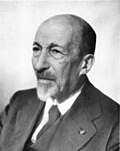 Jacques HadamardBoth received Grand prix des sciences mathématiques
 Sophie GermainBoth received Grand prix des sciences mathématiques
 Jean Gaston DarbouxBoth received Grand prix des sciences mathématiques
Fame.am measures public visibility signals. It does not measure human value, talent, morality, or credibility.