Carl Bosch
German chemical engineer (1874-1940) · Germany · Scientists · Died at 65
Carl Bosch is read about 380 times a day, in 71 languages.
A typical day, 30 days to 15 October 2026
The middle day of the days counted, so one week of news cannot move it. The line under it is the last 390 days, one point a day.
Something wrong?He turned air into bread. The process Carl Bosch scaled up pulls nitrogen from the atmosphere to make ammonia - the base of synthetic fertilizer that now feeds roughly half the planet.
A life in dates
Also in Deutsch
Photos 6

.jpg?width=1200)


Awards
In their orbit
About this person
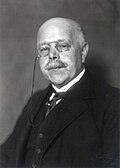
Born in 1874, Bosch was a German chemist and engineer who took Fritz Haber's lab-scale ammonia synthesis and made it work at industrial pressure and temperature - a problem most thought unsolvable. The Haber-Bosch process went live in 1913 and changed agriculture forever, enabling mass fertilizer production and, less cheerfully, explosives on a new scale. He co-founded IG Farben, which became the largest chemical company on earth. Later he co-developed the Bosch-Meiser urea process. He won the Nobel in Chemistry and died in 1940, having engineered the chemical backbone of modern food supply.




Fame.am measures public visibility signals. It does not measure human value, talent, morality, or credibility.