Bernhard von Bülow
German and Prussian politician (1849-1929) · Germany · Politicians · Died at 80
Bernhard von Bülow is read about 371 times a day, in 50 languages.
A typical day, 30 days to 16 September 2026
The middle day of the days counted, so one week of news cannot move it. The line under it is the last 60 days, one point a day.
Something wrong?The German chancellor who spent nine years trying to turn his country into a global power and succeeded mainly in making enemies. His bellicose Weltpolitik picked fights over Morocco, strengthened the alliance against Germany, and laid track straight toward 1914.
A life in dates
Also in Deutsch
Photos 8
.png?width=1200)


_-_27_October_1907.jpg?width=1200)

In their own words 5
 ,
, [It was] through the ineptitude and stupidity of Bethmann and Jagow [that Germany had] blundered into war [in den Krieg taumelten].
We ourselves brought about [this war] through the ultimatum to Serbia (which we either permitted or inspired).
You have given [the Austrians] carte blanche - do you realize what you have done?
Awards
Family
Parents
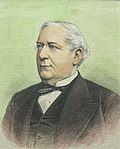 Bernhard von Bülow
Partners

Brothers and sisters

Is this everyone?
Only relatives with a profile here are drawn, so a family can be larger than this. A line here can also be wrong.
Correct this familyAbout this person
Bernhard von Bülow was born in 1849 into Danish-German aristocracy and followed his father into diplomacy after the elder Bülow became foreign secretary under Bismarck. He climbed through posts including ambassador to Rome before Wilhelm II made him foreign secretary in 1897, then chancellor in 1900. For nine years he oversaw economic growth and scientific progress at home while pushing an expansionist foreign policy that repeatedly misfired: his challenge to France in Morocco sparked the First Moroccan Crisis and tightened the Entente Cordiale instead of breaking it. In 1908 the Daily Telegraph Affair - Wilhelm's reckless published remarks - wrecked German prestige, and Bülow took the blame for letting it happen. He lost the Kaiser's confidence and the Reichstag's support, resigned in 1909, and retired to Rome. He surfaced briefly in 1914 as interim ambassador to Italy but couldn't keep Victor Emmanuel out of the Allied camp. He died in Rome in 1929.


Fame.am measures public visibility signals. It does not measure human value, talent, morality, or credibility.