August Wilhelm Schlegel
German poet, translator, critic, and writer (1767-1845) · Germany · Writers · Died at 77
August Wilhelm Schlegel is read about 150 times a day, in 48 languages.
Counted to 17 September 2026, not since.
The middle day of the days counted, so one week of news cannot move it. The line under it is the last 60 days, one point a day.
Something wrong?He turned Shakespeare into a German institution. August Wilhelm Schlegel's translations didn't just cross a language barrier - they made the plays feel as though they'd been written in German all along, remaking the canon for an entire culture.
Also in Deutsch
Photos 8


In their own words 1
 ,
German orientalists, A.W. Schlegel claimed in 1819, were not suited to be missionaries or colonizers: “...
Awards
Family
Parents
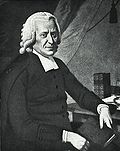 August Wilhelm Schlegel
Partners

Brothers and sisters

Is this everyone?
Only relatives with a profile here are drawn, so a family can be larger than this. A line here can also be wrong.
Correct this familyAbout this person
Born in Hanover in September 1767, Schlegel came of age as German Romanticism was gathering force. Alongside his brother Friedrich, he became a central figure in the Jena circle, where criticism and poetry bled into each other. His Shakespeare translations, begun in the 1790s, did more than render the plays faithfully - they gave Germany a classical dramatist it could claim as its own. Later he moved eastward in focus: he became the first professor of Sanskrit on the Continent and produced a translation of the Bhagavad Gita, bridging Europe and India through philology. He died in May 1845, having spent a lifetime making foreign masterworks feel native.



Fame.am measures public visibility signals. It does not measure human value, talent, morality, or credibility.