Arthur Evans
British archaeologist and scholar (1851-1941) · United Kingdom · Academics · Died at 90
Arthur Evans is read about 260 times a day, in 55 languages.
A typical day, 30 days to 8 October 2026
The middle day of the days counted, so one week of news cannot move it. The line under it is the last 76 days, one point a day.
Something wrong?He bought a hillside in Crete and dug up an entire lost civilization. Evans named the Minoans, cracked their scripts, and gave Bronze Age archaeology a shape it still holds.
A life in dates
Also in Deutsch
Photos 8
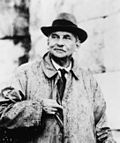
 Sir Arthur John Evans
.jpg?width=1200) 76 of 'Through Bosnia and the Herzegóvina on foot, during the insurrection, August and September 1875, with an historical review of Bosnia ... With ... illustrations, etc' (11114438504)
76 of 'Through Bosnia and the Herzegóvina on foot, during the insurrection, August and September 1875, with an historical review of Bosnia ... With ... illustrations, etc' (11114438504) Aerial View of Youlbury House with Oxford Beyond
 Anastylose Evans Cnossos 1
 Anastylose Evans Cnossos 2
 Ascertained
 Broighter Torc design Evans 1897
 Columns in Knossos, Crete
In their own words 1
 ,
, Civilization in its higher form today, though highly complex, forms essentially a unitary mass.
Awards
Family
Parents
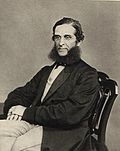 Arthur Evans
Partners
Is this everyone?
Only relatives with a profile here are drawn, so a family can be larger than this. A line here can also be wrong.
Correct this familyAbout this person
Arthur John Evans was born 8 July 1851 in Britain. In the late 1890s he learned of earlier digs at Knossos - started in 1877 by Minos Kalokairinos, shut down by Ottoman authorities after three weeks - and used private money to purchase the site outright. He began excavating in 1900. What he unearthed forced a rethinking: the structures and artifacts didn't fit Mycenaean Greece, so Evans proposed a distinct, older culture, which he called Minoan. He also identified and named two Cretan scripts, Linear A and Linear B, plus an earlier pictographic system. He died 11 July 1941, three days after his ninetieth birthday.
In common with Arthur

Academics from the United Kingdom 3


Fame.am measures public visibility signals. It does not measure human value, talent, morality, or credibility.