Andrei Tarkovsky
Soviet and Russian film director, screenwriter, film editor, film theorist, theatre and opera director (1932-1986) · France · Directors · Died at 54
Andrei Tarkovsky is read about 3,371 times a day, in 82 languages.
A typical day, 30 days to 20 October 2026
The middle day of the days counted, so one week of news cannot move it. The line under it is the last 395 days, one point a day.
Something wrong?Soviet director whose seven films - slow, spiritual, built from long takes and light moving through water - are studied like scripture by people who think cinema can be more than entertainment.
A life in dates
 The SacrificeFilm, 1986Director, Writer1983Cannes Best Director AwardAward1980“An artist needs knowledge and the power of observation only so that he can tell from what he is abstaining, and to be sure that his abstention will not appear artificial or false.”In their words7 July 1980Journal entry (7 July 1980); published in Time Within Time: The Diaries 1970-1986 (1989)1979
 Look Out, Snakes!Film, Writer1974
 Sour GrapesFilm, Writer1969
 One Chance in One ThousandFilm, Writer1967
 Schwarzhuhnbraunhuhnschwarzhuhnweißhuhnrothuhnweiß oder put-puttFilm, sniper1965
 I Am TwentyFilm, guest at Anya's party1962Golden LionAward1961
 The Steamroller and the ViolinFilm, Director, Writer1956
 The KillersFilm, Director1932Born4 April 1932
Also in Deutsch
Photos 8
 Andrei tarkovsky stamp russia 2007
 Andrej Tarkovskij mug shot at Latina Refugee Camp 1985 (cropped)
 Andrej Tarkovskij mug shot at Latina Refugee Camp 1985
 Museum of local lore of Kadyysky District 24
 Scheda personale di registrazione di Andrei Tarkowski 2
 Scheda personale di registrazione di Andrei Tarkowski 3
 Scheda personale di registrazione di Andrei Tarkowski
 Tarkovsky vgik detail
In their own words 10
 ,
For me the most interesting characters are outwardly static, but inwardly charged by an overriding passion.
I have to say from the outset that not all prose can be transferred to the screen.
I find poetic links, the logic of poetry in cinema, extraordinarily pleasing.
Filmography 40
 DADaedalus
 DEDeath
 MCMorceaux de Cannes
 APAndrey Tarkovsky. A Cinema Prayer
 AGAndrei Tarkovsky: Hard to Be a God
 STSacrifices of Andrei Tarkovsky
 RSRerberg and Tarkovsky. The Reverse Side of 'Stalker'
 MTMeeting Andrei Tarkovsky
 IRIslands: Georgy Rerberg
 OAOne Day in the Life of Andrei Arsenevich
 ATAndrei Tarkovsky: Poetry and Truth
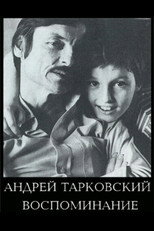 ARAndrei Tarkovsky: The Reminiscence
 VTVoyage in Time
 BSBuilding Images: Anna Asp on Scenography
 DTDirected by Andrei Tarkovsky
 TTThe Exile and Death of Andrei Tarkovsky
 LILighting
 MEMoscow Elegy
 ISIslandsTSThe Sacrifice
 TBThe Road to Bresson
 ACAndrei Tarkovsky: A Poet in the Cinema
 ANAndrey Tarkovsky in Nostalghia
 CTCinema Is a Mosaic Made of Time
 NONostalgia
 STStalkerLSLook Out, Snakes!
 MIMirrorSGSour Grapes
 SOSolarisOTOne Chance in One Thousand
 SLSergey LazoSPSchwarzhuhnbraunhuhnschwarzhuhnweißhuhnrothuhnweiß oder put-putt
 ARAndrei Rublev
 TAThe Three AndreisITI Am Twenty
 ICIvan's ChildhoodTVThe Steamroller and the Violin
 TTThere Will Be No Leave TodayTKThe Killers
80 credits on file
Television 1
 LCLegends of Cinema
Awards
Family
Parents
 Andrei Tarkovsky
Partners

Is this everyone?
Only relatives with a profile here are drawn, so a family can be larger than this. A line here can also be wrong.
Correct this familyAbout this person
Andrei Tarkovsky studied under Mikhail Romm at the All-Union State Institute of Cinematography and made his first five features in the Soviet Union between 1962 and 1979: Ivan's Childhood, Andrei Rublev, Solaris, Mirror, and Stalker. Years of friction with state film authorities led him to leave the country in 1979; he completed two final films abroad, Nostalghia in 1983 and The Sacrifice in 1986. That same year he published Sculpting in Time, a book on cinema and art, and died of cancer possibly linked to toxic conditions on the Stalker set. He won the Golden Lion at Venice for Ivan's Childhood, the Grand Prix Spécial du Jury at Cannes, and a posthumous Lenin Prize in 1990. Three of his films appeared in Sight & Sound's 2012 list of the greatest films ever made.



Fame.am measures public visibility signals. It does not measure human value, talent, morality, or credibility.