Amartya Sen is read about 1,435 times a day, in 87 languages.
A typical day, 30 days to 15 October 2026
The middle day of the days counted, so one week of news cannot move it. The line under it is the last 390 days, one point a day.
Something wrong?An economist who made famine and inequality problems you could measure - and for showing how freedom and welfare twist together in ways markets alone miss, he took the Nobel.
A life in dates
Also in Deutsch
Photos 8
 Amartya Sen 2012
.jpg?width=1200) Amartya Sen , c2000 (4379245908)
Amartya Sen , c2000 (4379245908) Amartya Sen NIH
 Bookspine
.jpg?width=1200) Flávio Comim, Amartya Sen e Francisco Marshall no Fronteiras do Pensamento Porto Alegre 2012 (6971623964)
Flávio Comim, Amartya Sen e Francisco Marshall no Fronteiras do Pensamento Porto Alegre 2012 (6971623964).jpg?width=1200) Flávio Comim, Amartya Sen e Francisco Marshall no Fronteiras do Pensamento Porto Alegre 2012 (7117701035)
Flávio Comim, Amartya Sen e Francisco Marshall no Fronteiras do Pensamento Porto Alegre 2012 (7117701035)_04.jpg?width=1200) Si las paredes hablaran… de Economía (Idígoras, 2022) 04
Si las paredes hablaran… de Economía (Idígoras, 2022) 04_12.jpg?width=1200) Si las paredes hablaran… de Economía (Idígoras, 2022) 12
Si las paredes hablaran… de Economía (Idígoras, 2022) 12In their own words 10
 ,
, Democracy has to be judged not just by the institutions that formally exist but by the extent to which different voices from diverse sections of the people can actually be heard.
I agree with Mr Wolf that freedom is centrally important.
People's priorities and actions are influenced by many different affiliations and associations, not just by their religion.
Awards
Family
Amartya SenPartners


Children


Is this everyone?
Only relatives with a profile here are drawn, so a family can be larger than this. A line here can also be wrong.
Correct this familyAbout this person
Born in Bengal in 1933, Amartya Sen studied economics through the lens of hunger and choice in a country that knew both intimately. His doctoral work led him to England and the U.S. from 1972 onward, where he rebuilt welfare economics around capabilities - what people can actually do and be - rather than income alone. The Nobel came in 1998 for contributions to social choice and welfare theory; India gave him the Bharat Ratna a year later. He taught at Cambridge as master of Trinity College before moving to Harvard, where he holds a university professorship in economics and philosophy. In 2020 the German Book Trade honored him for work on global justice, health, and education - the through-line of a career spent making deprivation visible in equations.
In common with Amartya
 Francis FukuyamaBoth received Johan Skytte Prize in Political Science
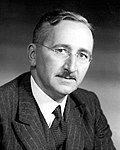 Friedrich HayekBoth received Prize in Economic Sciences in Memory of Alfred Nobel
 Paul SamuelsonBoth received Prize in Economic Sciences in Memory of Alfred Nobel
 Dani RodrikBoth received Albert O. Hirschman Prize
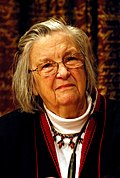 Elinor OstromBoth received Johan Skytte Prize in Political Science
 Claude Lévi-StraussBoth received Meister Eckhart Prize
Fame.am measures public visibility signals. It does not measure human value, talent, morality, or credibility.