Alexei Alexeyevich Abrikosov
Soviet, Russian and American theoretical physicist · United States · Scientists · Lived 1928 to 2017 · aged 88
Alexei Alexeyevich Abrikosov is read about 144 times a day, in 79 languages.
A typical day, 30 days to 22 October 2026
The middle day of the days counted, so one week of news cannot move it. The line under it is the last 397 days, one point a day.
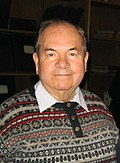
Something wrong?He explained how matter behaves when temperatures plunge near absolute zero - work that earned him a share of the 2003 Nobel Prize in Physics and bridged Soviet-era theory with the experimental edge of superconductivity.
A life in dates
Also in Deutsch
Photos 8


In their own words 1
 ,
If they can in their proposals write the word Nano, the chances for funding increase.
Awards
Family
 Alexei Alexeyevich Abrikosov
Partners
Is this everyone?
Only relatives with a profile here are drawn, so a family can be larger than this. A line here can also be wrong.
Correct this familyAbout this person
Born in Moscow on June 25, 1928, Alexei Alexeyevich Abrikosov built his career in condensed matter physics under the Soviet system, probing the strange states that emerge when you cool materials to the coldest realms imaginable. His theoretical contributions clarified the mechanics of superconductors and quantum phenomena at extreme low temperatures. In 2003 he shared the Nobel Prize in Physics with Vitaly Ginzburg and Anthony James Leggett for that body of work. He carried Soviet, Russian, and eventually American citizenship through a life that spanned the Iron Curtain and the thaw. He died on March 29, 2017.
In common with Alexei


Fame.am measures public visibility signals. It does not measure human value, talent, morality, or credibility.