Albrecht Kossel
German biochemist and pioneer in the study of genetics · Germany · Scientists · Lived 1853 to 1927 · aged 73
Albrecht Kossel is read about 53 times a day, in 64 languages.
Counted to 16 September 2026, not since.
The middle day of the days counted, so one week of news cannot move it. The line under it is the last 361 days, one point a day.
Something wrong?He identified the five chemical building blocks - adenine, cytosine, guanine, thymine, uracil - that spell out inheritance in every living cell, work that earned him the 1910 Nobel and set the stage for cracking DNA itself.
Also in Deutsch
Photos 7


.jpg?width=1200)


.jpg?width=1200)
Awards
Family

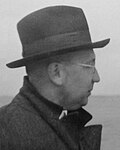
Is this everyone?
Only relatives with a profile here are drawn, so a family can be larger than this. A line here can also be wrong.
Correct this familyAbout this person
Born in 1853, Kossel trained under Felix Hoppe-Seyler and spent his career dismantling the molecular architecture of life. He isolated and described the five organic compounds present in nucleic acid, then pushed into protein composition, predicting the polypeptide backbone before anyone could prove it. From 1895 until his death in 1927 he edited the Zeitschrift für Physiologische Chemie, shaping a generation of biochemists - Henry Drysdale Dakin, Edwin B. Hart, and Friedrich Miescher among them. The Nobel came in 1910 for determining the chemical composition of nucleic acids. Today a neuroregeneration institute at the University of Rostock carries his name.



Fame.am measures public visibility signals. It does not measure human value, talent, morality, or credibility.