Albert II, Prince of Monaco
Prince of Monaco (born 1958) · United States · also Monaco
Albert II, Prince of Monaco is read about 3,731 times a day, in 80 languages.
A typical day, 30 days to 15 October 2026
The middle day of the days counted, so one week of news cannot move it. The line under it is the last 390 days, one point a day.
Something wrong?The prince who raced bobsleds at five Winter Olympics before inheriting a principality smaller than Central Park - and a billion-dollar stake in the casino that keeps it running.
A life in dates
Also in Deutsch
Photos 8
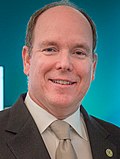
 Prince Albert II 2016
 Hans Blix & Prince Albert of Monaco (01410160) (5488418942)
 Jeton - Monaco, Albert II de Monaco & de Charlene Wittstock, jeton, 2011 - btv1b11333435p (1 of 2)
 Jeton - Monaco, Albert II de Monaco & de Charlene Wittstock, jeton, 2011 - btv1b11333435p (2 of 2)
 Monnaie - Monaco, Albert II de Monaco, 2009 - btv1b113328831 (1 of 2)
 Monnaie - Monaco, Albert II de Monaco, 2009 - btv1b113328831 (2 of 2)
 Monnaie - Monaco, Rainier III de Monaco & Albert Prince héréditaire, 1982 - btv1b113328458 (1 of 2)
 Monnaie - Monaco, Rainier III de Monaco & Albert Prince héréditaire, 1982 - btv1b113328458 (2 of 2)
In their own words 3
 ,
Any time I'm seen with a pretty young woman by my side more than once, then everybody flashes the 'M' word, as you say.
I did poorly the times they did come to see me. So I didn't really encourage them to come see me.
I've practiced a lot of different sports. I stopped counting after 15.
Awards
Family
Parents

 Albert II, Prince of Monaco
Partners

Children


Brothers and sisters


Is this everyone?
Only relatives with a profile here are drawn, so a family can be larger than this. A line here can also be wrong.
Correct this familyAbout this person
Albert Alexandre Louis Pierre Grimaldi was born 14 March 1958 at the Prince's Palace, second child and only son of Prince Rainier III and Princess Grace. He studied political science at Amherst College, then competed in bobsleigh from the 1988 Games through 2002. Appointed regent in March 2005 when his father fell ill, he became sovereign prince a week later. He founded the Prince Albert II of Monaco Foundation in 2006, pushing ocean conservation and renewable energy with the fervor of someone trying to prove a hereditary title can mean more than ceremony. In July 2011 he married South African Olympic swimmer Charlene Wittstock; they have twins, Gabriella and Jacques, the latter his heir. He recognizes four children in total - two from earlier relationships - though paternity claims have trailed him, the price of reigning over a place where privacy is a scarce resource and the casino always wins.


Fame.am measures public visibility signals. It does not measure human value, talent, morality, or credibility.