Adolf Butenandt
German biochemist (1903-1995) · Germany · Scientists · Died at 91
Adolf Butenandt is read about 84 times a day, in 70 languages.
Counted to 16 September 2026, not since.
The middle day of the days counted, so one week of news cannot move it. The line under it is the last 60 days, one point a day.
Something wrong?A German biochemist who won the Nobel Prize in Chemistry in 1939 for his work on sex hormones, then had to refuse it under Nazi government policy - and only accepted it a decade later, after the war ended.
A life in dates
Also in Deutsch
Photos 8
.jpg?width=1200) Bad Schachen Porträt; Adolf Butenandt - W134Nr.020182c - Willy Pragher (cropped)
Bad Schachen Porträt; Adolf Butenandt - W134Nr.020182c - Willy Pragher (cropped) 17. Tagung 1967 Chemiker; Eröffnungsfeier- Adolf Butenandt, Frau Staudinger - LABW - Staatsarchiv Freiburg W 134 Nr. 083723a
 17. Tagung 1967 Chemiker; Eröffnungsfeier- Adolf Butenandt, Lord Alexander Todd of Trumpington, Robert S. Mulliken - LABW - Staatsarchiv Freiburg W 134 Nr. 083727a
 17. Tagung 1967 Chemiker; Eröffnungsfeier- Harold C. Urey, Adolf Butenandt, Lord Alexander Todd of Trumpington, Robert S. Mulliken - LABW - Staatsarchiv Freiburg W 134 Nr. 083727b
 17. Tagung 1967 Chemiker; Eröffnungsfeier- Harold C. Urey, Adolf Butenandt, Lord Alexander Todd of Trumpington, Robert S. Mulliken - LABW - Staatsarchiv Freiburg W 134 Nr. 083727d
.jpg?width=1200) A. Butenandt 1921 (cropped)
A. Butenandt 1921 (cropped) A. Butenandt 1921
 A. Butenandt 07-1935
Awards
In their orbit
About this person
Adolf Friedrich Johann Butenandt was born 24 March 1903 in Lehe near Bremerhaven. His research into sex hormones earned him the Nobel Prize in Chemistry in 1939, but he initially rejected the award in accordance with government policy, a decision that shadowed the recognition for a decade. After World War II, he accepted the prize in 1949. In 1959 he became the first to discover the structure of the sex pheromone of silkworms, which he named bombykol. From 1960 to 1972 he served as President of the Max Planck Society. He died 18 January 1995 in Munich.
In common with Adolf
 Chintamani Nagesa Ramachandra RaoBoth received August Wilhelm von Hofmann Medal
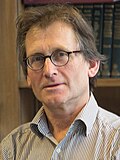 Ben FeringaBoth received August Wilhelm von Hofmann Medal
 Omar M. YaghiBoth received August Wilhelm von Hofmann Medal
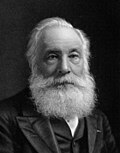 William Henry PerkinBoth received August Wilhelm von Hofmann Medal
 Emilio SegrèBoth received August Wilhelm von Hofmann Medal
 Robert RobinsonBoth received August Wilhelm von Hofmann Medal
Fame.am measures public visibility signals. It does not measure human value, talent, morality, or credibility.