
What kind of moment: History, War
Philippine-American War begins
Following the Spanish-American War, the conflict between U.S. forces and Filipino insurgents marked America's first major anti-colonial war.
- When
- 4 February 1899
The conflict cost roughly 200,000 Filipino lives - mostly civilians - and marked America's first major overseas military engagement as an imperial power. It exposed deep fractures in American ideology around democracy and self-determination, fractures that would resurface repeatedly throughout the 20th century.
In numbers
- American troops deployed
- Approximately 70,000
- Philippine population pre-war
- Approximately 7 million
Where it sits in their lives
 Theodore Roosevelt1858 to 191940
 William McKinley1843 to 190156
 Emilio Aguinaldo1869 to 196429
 Apolinario Mabini1864 to 190334
- Their age at this moment
- Their other moments in history
How it unfolded
Treaty of Paris signed
Spain cedes the Philippine Islands to the United States for $20 million, formally ending the Spanish-American War and setting the stage for armed conflict with Filipino independence forces.
Philippine-American War begins
Tensions between American forces and the Filipino First Republic under Emilio Aguinaldo escalate into open warfare near Manila, marking the start of a brutal three-year conflict.
American offensives expand
U.S. General Arthur MacArthur leads campaigns beyond Manila, establishing American military control over key regions of Luzon while Filipino forces adopt guerrilla tactics.
Emilio Aguinaldo captured
American forces under Frederick Funston capture Philippine independence leader Emilio Aguinaldo in northern Luzon, a turning point that weakens organized Filipino resistance.
War officially declared over
President Theodore Roosevelt announces the end of the Philippine-American War, though sporadic fighting and insurgent activity continue for years in various regions.
Moro Rebellion begins
Muslim populations in Mindanao resist American colonial rule, launching a separate conflict that lasts until 1913 and claims thousands of lives on both sides.
- What followed
1899: American imperialism cemented in Asia
- What followed
1900: American public debate over imperialism
- What followed
1902: Development of American counterinsurgency doctrine
Who took part

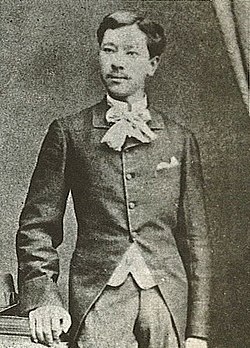

More about this war
Before and after, with the same people
- Philippians war of independence
 AguinaldoSee the moment ›
- 1896 United States presidential election: William McKinley wins
 McKinleySee the moment ›
- Philippine-American War begins
 Roosevelt, McKinley, AguinaldoThis moment
- 1900 United States presidential election: William McKinley winsRoosevelt, McKinleySee the moment ›
- Pan-American Exposition & McKinley assassinationMcKinleySee the moment ›