
What kind of moment: History, Civil war
Lebanese Civil War begins
- When
- 13 April 1975 to 13 October 1990
- Where
- Lebanon
- Outcome
- Taif Agreement; Christian-to-Muslim representation in Parliament of Lebanon adjusted from ratio of 55:45 to 50:50 and increasing the number of seats from 99 to 108 - and eventually to 128; Political powers of Muslim-reserved position of Prime Minister strengthened over Christian-reserved position of President
In April 1975, Lebanon descended into civil war as rival militias-primarily Christian and Muslim factions-began armed conflict that would ravage the country for 15 years. The war killed an estimated 150,000 people, displaced nearly a million, and turned Beirut from a thriving regional hub into a symbol of state collapse. It reshaped the entire Middle East's political landscape and demonstrated how quickly sectarian tensions could destroy a functioning state.
The Lebanese Civil War exposed the fragility of multicommunal states without strong institutional safeguards. Its 15-year duration and sectarian character established a template for regional instability that persisted through the 1980s and beyond, while the war's conclusion in 1990 demonstrated that exhaustion, not victory, often ends protracted conflicts.
In numbers
- Displaced persons
- Nearly 1 million
Where it sits in their lives
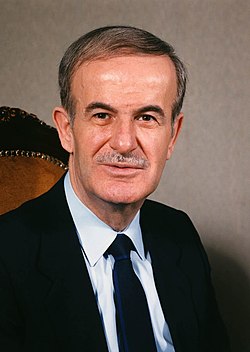 Hafez al-Assad1930 to 200044
 Al Moualem Al shahid Kamal Jumblatt1917 to 197757
 Walid Jumblatt1949 to now25
 Bachir Gemayel1947 to 198227
- Their age at this moment
How it unfolded
Civil war erupts
Fighting breaks out in Beirut between Christian Phalange militias and Muslim factions, triggered by tensions over Palestinian refugee presence and political power-sharing disputes.
Beirut divided
The capital splits into Christian-controlled east and Muslim-controlled west, with the Green Line becoming the de facto border. Syrian forces enter Lebanon to stabilize the conflict.
Operation Peace for Galilee
Israel launches a major invasion with the stated goal of removing Palestinian fighters; Lebanese casualties mount significantly and the war intensifies.
Lebanese-Israeli accord
Lebanon and Israel sign a ceasefire agreement, though it fails to hold and Israeli forces remain in occupation.
West Beirut explodes
Heavy fighting erupts in western Beirut between rival Shia militias (Hezbollah and Amal), causing widespread destruction and civilian casualties.
Ta'if Agreement
Saudi-sponsored accord is reached in Ta'if, Saudi Arabia, establishing a framework for ending the war and reforming Lebanon's political system.
- What followed
1985: Hezbollah founded with Iranian backing
- What followed
1990: Ta'if Agreement ends official hostilities
- What followed
2019: Lebanon's currency collapses; financial crisis engulfs nation
Who took part


More about this civil war
Leaders
Bachir Gemayel (Lebanese Front (1976-1990), Kataeb Party +4 more), Amine Gemayel, William Hawi, Dany Chamoun, Elie Hobeika, Samir Geagea
Al Moualem Al shahid Kamal Jumblatt (Lebanese National Resistance Front (1982-1990), Al-Mourabitoun (INM) +4 more), Walid Jumblatt, Assem Qanso, George Hawi, Elias Atallah, Ibrahim Kulaylat
Hafez al-Assad (Syria Syria (1976, 1982-1991), Amal Movement +3 more), Mustafa Tlass, Hikmat al-Shihabi, Ali Aslan, Nabih Berri, Tony Frangieh
Michel Aoun (Multinational Force in Lebanon (1982-1984), United States +4 more), William O'Callaghan, Gustav Hägglund