
What kind of moment: History, Regime change
Hittite empire at peak
- When
- about 1274 BC
In about 1274 BC, the Hittite Empire under Suppiluliuma II reached its territorial and political zenith across Anatolia and the Levant, commanding one of the Bronze Age's most sophisticated military and administrative systems. At this moment of peak power, the empire controlled vast trade networks and maintained treaties with Egypt and other regional powers. Within a generation, the entire civilization would collapse, leaving behind cuneiform records that would only be deciphered in the 19th century.
The Hittites at their apex represented the Bronze Age's most advanced state apparatus: they developed iron-working technology ahead of rivals, maintained detailed written law codes, and built a diplomatic infrastructure that set templates for empires to follow. Their sudden collapse about 1177 BC triggered the Bronze Age Collapse and reshaped the entire Mediterranean and Near Eastern geopolitical order.
In numbers
- Primary ruling figure
- Suppiluliuma II (r. ~about 1280 to 1260 BC)
How it unfolded
- about 1650 BC
Old Kingdom establishment
Hittites consolidate power in north-central Anatolia under early dynastic rulers, establishing Hattusa as administrative center.
- about 1450 BC
New Kingdom begins
Suppiluliuma I expands Hittite territory dramatically; empire becomes a major regional power competing with Egypt and Mitanni.
- about 1274 BC
Empire at maximum extent
Under Suppiluliuma II, the Hittite Empire controls its largest territory, maintains trade networks across the Mediterranean and Near East, and commands sophisticated military and bureaucratic systems.
- about 1259 BC
Egyptian treaty renewal
Hittites maintain diplomatic relations with Egypt through formal treaties, demonstrating peak soft power and regional status.
- about 1200 BC
System strain
Evidence of internal instability and external pressure emerges; climate disruption and population movements begin to destabilize the empire.
- about 1177 BC
Collapse of Hattusa
The capital falls, likely to combined pressure from Sea Peoples invasion, internal revolt, and climate crisis. The Hittite Empire ceases to exist; their records survive in cuneiform archives.
- What followed
1274 BC: Battle of Kadesh establishes Hittite-Egyptian parity
- What followed
1259 BC: Treaty of Hattusa signed between Hittites and Egypt
- What followed
1200 BC: Iron-working technology spreads from Hittite centers

Hittites

Named in the story
More about this regime change
Before and after, with the same people
- Battle of Kadesh
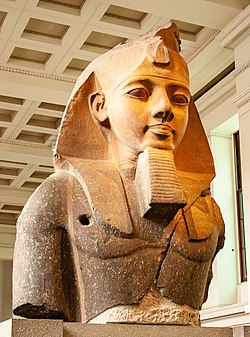
 Ramesses IISee the moment ›
- Hittite empire at peakRamesses IIThis moment