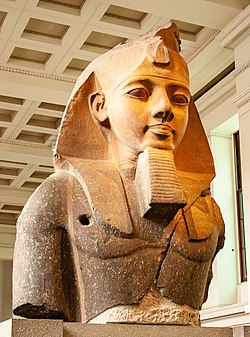
What kind of moment: History, Battle
Battle of Kadesh
- When
- about 1274 BC
- Where
- Orontes River, near Kadesh (modern-day Lebanon-Syria border)
- Outcome
- Inconclusive
In about 1274 BC, Egyptian pharaoh Ramesses II and Hittite king Muwatalli II clashed at the Orontes River in what would become history's largest chariot battle. After Ramesses invaded the Syrian province of Amurru the year before, the two superpowers met head-on - and the encounter nearly ended in Egyptian catastrophe before stabilizing into a stalemate that neither side could fully claim as victory.
Kadesh exposed the limits of Egyptian expansion in the Levant and forced Ramesses II to abandon his territorial ambitions there. The battle's strategic deadlock ultimately led to the first known peace treaty between major powers, signed between Egypt and the Hittites in about 1259 BC, reshaping the ancient Near East's power balance.
In numbers
- Chariot forces engaged
- Estimated 5,000+ chariots combined
His life around it
- Born
- Battle of Kadesh
- Died
How it unfolded
- about 1275 BC
Ramesses II invades Amurru
Ramesses II launches a military campaign into the Syrian province of Amurru, a territory previously under Hittite influence, escalating tensions with Muwatalli II.
- about 1274 BC
Egyptian army departs for Kadesh
Ramesses II mobilizes his forces, organizing them into four divisions named after Egyptian gods: Amun, Ra, Ptah, and Sutekh, for the campaign into northern Syria.
- about 1274 BC
Ramesses II receives false intelligence
Two Shasu nomads, sent by the Hittites to mislead him, tell Ramesses II that Muwatalli II's army is far away near Aleppo. Ramesses advances with the Amun division ahead of the other three.
- about 1274 BC
Hittite ambush at Kadesh
Muwatalli II's chariotry crosses the Orontes River, routs the Ra division on the march and then attacks the Amun division's camp.
- about 1274 BC
Ramesses II rallies his forces
Trapped and surrounded, Ramesses II invokes the god Amun and rallies remaining soldiers, preventing complete annihilation of the Egyptian army and buying time for reinforcements.
- about 1259 BC
Egyptian-Hittite peace treaty signed
Ramesses II and the Hittite king Hattusili III conclude the Egyptian-Hittite peace treaty, the oldest known surviving peace treaty, with mutual defence clauses and borders in Syria.
- What followed
1274 BC: Stalemate recognition
- What followed
1274 BC: Shift in Syrian spheres of influence
- What followed
1259 BC: Treaty of Kadesh ratification