
What kind of moment: History, Event
Greek War of Independence declared
- When
- 1821
Greek revolutionaries declared independence from Ottoman rule in 1821, launching an eight-year war that would reshape the eastern Mediterranean. The rebellion succeeded with crucial military support from Britain, France, and Russia - making it one of the first nationalist uprisings to attract international backing. By 1829, the Ottoman Empire formally recognized Greek independence, establishing the first new European nation-state since the Napoleonic Wars.
The Greek War of Independence proved that a determined popular uprising could topple an empire, even one as entrenched as the Ottomans. The conflict also demonstrated the power of nationalist ideology in the 19th century and set a template for independence movements across the Balkans and beyond.
In numbers
- Duration
- 1821-1829 (8 years)
- Major international allies
- Britain, France, Russia (from 1826 onward)
- First president of independent Greece
- Ioannis Kapodistrias (1828-1831)
Where it sits in their lives
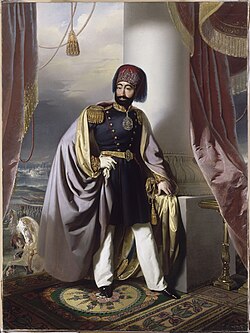 Mahmud II1785 to 183936
 Ioannis Kapodistrias1776 to 183145
 Theodoros Kolokotronis1770 to 184351
 Alexander Ypsilantis1792 to 182829
- Their age at this moment
How it unfolded
Declaration of Independence
Greek revolutionaries declare independence from Ottoman rule on the Feast of the Annunciation. The uprising begins in the Peloponnese and spreads across Greek territories.
Patriarch Gregorios V Executed
Battle of Psara
Ottoman fleet destroys the Greek island of Psara in a naval assault, though Greek forces continue resistance through guerrilla tactics.
Battle of Navarino
Treaty of Adrianople
Russia and the Ottoman Empire sign the Treaty of Adrianople, which effectively recognizes Greek independence and establishes Greece as an autonomous state.
- What followed
1829: Establishment of the Greek State
- What followed
1829: Ottoman Empire's Decline Accelerates
- What followed
1830: European Great Power Realignment


