
What kind of moment: History, Protest
Cedar Revolution protests
- When
- 14 February to 27 April 2005
- Where
- Lebanon (especially in the capital Beirut)
- Outcome
- Victory of the anti-Syrian coalition
In February 2005, hundreds of thousands of Lebanese took to the streets of Beirut after the assassination of former Prime Minister Rafic Hariri, demanding the withdrawal of Syrian troops and an end to Syrian political control. The uprising, which lasted weeks and drew people across sectarian lines, forced Syria to announce a pullout and triggered early parliamentary elections. It marked a rare moment of unified Lebanese resistance that temporarily reshaped the country's political landscape.
The Cedar Revolution temporarily unified a fractionally divided Lebanon and directly forced Syria to end a 29-year military presence. The movement demonstrated the power of sustained mass protest to shift geopolitical arrangements, though subsequent sectarian tensions and foreign intervention ultimately limited its long-term effects.
In numbers
- Syrian military tenure in Lebanon
- 29 years (1976-2005)
- Deaths in Hariri assassination
- 22 people
How it unfolded
Initial anti-Syrian demonstrations
Thousands gather in Beirut demanding accountability and calling for Syrian withdrawal, beginning sustained protest movement.
Pro-Syrian counter-rally
Hizbollah and Amal organize competing demonstration, highlighting sectarian fractures beneath surface unity.
Peak Cedar Revolution rally
Estimated 1 million protesters gather in Beirut's Martyrs' Square demanding Syrian withdrawal and new elections, marking largest demonstration in Lebanese history.
Syrian President Bashar al-Assad announces withdrawal
Assad declares Syria will begin military pullout, yielding to sustained pressure from Cedar Revolution.
Final Syrian troop deployment ends
Last Syrian military units formally leave Lebanese territory after 29-year occupation, ending tangible presence but not regional influence.
Parliamentary elections held
First elections following Syrian withdrawal see strong performance by anti-Syrian March 14 bloc, solidifying Cedar Revolution's electoral impact.
- What followed
2005: 2005 Lebanese parliamentary elections
- What followed
2005: UN investigation into Hariri assassination
- What followed
2006: Hezbollah and Amal ministerial participation


Named in the story
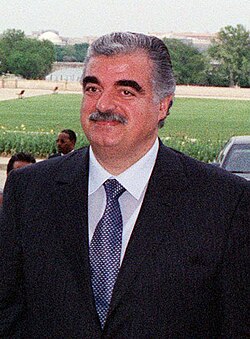
More about this protest
Leaders
Amine Gemayel (March 14 Alliance, Kataeb Party +4 more), Pierre Amine Gemayel, Elia frem, Nadim Gemayel, Samir Geagea, Sethrida Geagea
Bashar al-Assad (Syrian Arab Armed Forces, March 8 Alliance +4 more), Muhammad Naji al-Otari, Hasan Turkmani, Ali Habib Mahmud, Émile Lahoud, Omar Karami
Before and after, with the same people
- Hariri Assassination in BeirutHaririSee the moment ›
- Cedar Revolution protests
 HaririThis moment