William Gibson
American-Canadian speculative fiction writer · United States · On the map · Writers · Born 1948 · age 78
William Ford Gibson is an American and Canadian speculative fiction writer and essayist widely credited with pioneering the science fiction subgenre known as cyberpunk, a category from which he has repeatedly distanced himself.
William Gibson is read about 1,585 times a day, in 56 languages.
A typical day, 30 days to 6 November 2026
The middle day of the days counted, so one week of news cannot move it. The line under it is the last 400 days, one point a day.
Something wrong?A life in dates
People around William
Close ties

 William S. Burroughs Influenced William
 Cory Doctorow Influenced by William
 William Friedkin Directed Rules of Engagement (2000)
 Neal Stephenson Influenced by William
 Morten Tyldum Directed Pattern Recognition
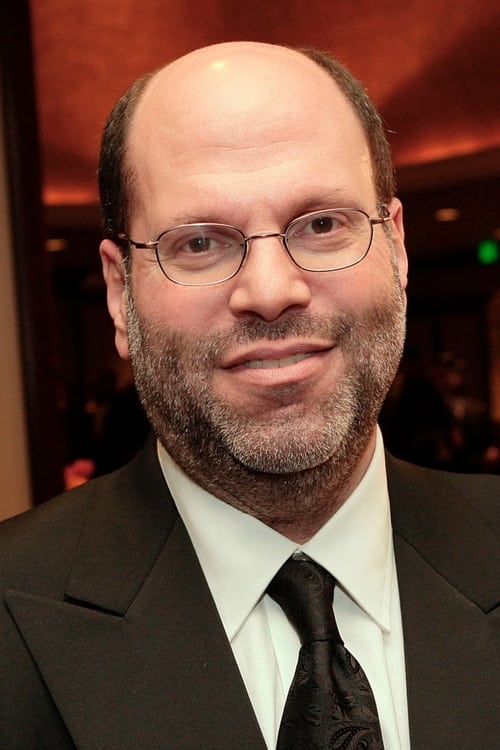 Scott Rudin Produced Rules of Engagement (2000)
 Charles Stross Influenced by William
 Nick Land Influenced by William
 Richard D. Zanuck Produced Rules of Engagement (2000)
 Richard K. Morgan Influenced by William
 William Smith William directed Piranha (1972)
 Alastair Reynolds Influenced by William
 Ken MacLeod Influenced by William
 Rob Bowman Directed The X-Files
 Robert Longo Directed Johnny Mnemonic (1995)
 Don Carmody Produced Johnny Mnemonic (1995)
 Robert Lantos Produced Johnny Mnemonic (1995)
- Lewis Call Influenced by William
Media & music
Photos 11

 William S. Burroughs at his 70th birthday party in 1984. Burroughs, more than any other Beat Generation writer, was an important influence on the adolescent Gibson.
 Gibson at a 2007 reading of Spook Country in Victoria, British Columbia. Since "The Winter Market" (1985), commissioned by Vancouver Magazine with the stipulation that it be set in the city, Gibson actively avoided using his adopted home as a setting until Spook Country.[23]
 The San Francisco-Oakland Bay Bridge, a fictional squatted version of which constitutes the setting for Gibson's Bridge trilogy
 Gibson signing one of his novels in 2010
 Bruce Sterling, co-author with Gibson of the short story "Red Star, Winter Orbit" (1983) and the 1990 steampunk novel The Difference Engine
 Aside from his short stories and novels, Gibson has written several film screenplays and television episodes.
 Gibson has often collaborated with performance artists such as theatre group La Fura dels Baus, here performing at the Singapore Arts Festival in May 2007.
In their own words 4
 ,
This perpetual toggling between nothing being new, under the sun, and everything having very recently changed, absolutely, is perhaps the central driving tension of my work.
This newfound state of No Future is, in my opinion, a very good thing.
Loss is not without its curious advantages for the artist. Major traumatic breaks are pretty common in the biographies of artists I respect.
Awards
About this person
Beginning his writing career in the late 1970s, his early works were noir, near-future stories that explored the effects of technology, cybernetics, and computer networks on humans, a "combination of lowlife and high tech" - and helped to create an iconography for the Information Age before the ubiquity of the Internet in the 1990s. Gibson coined the term "cyberspace" for "widespread, interconnected digital technology" in his short story "Burning Chrome" (1982), and later popularized the concept, along with his usage of the "matrix", in his acclaimed debut novel Neuromancer (1984). These early works of Gibson's have been credited with "renovating" science fiction literature in the 1980s.


