
Thomas E. Lovejoy
✓ Source-basedstableAmerican ecologist (1941-2021)
Thomas Eugene Lovejoy III was an American ecologist who was President of the Amazon Biodiversity Center, a Senior Fellow at the United Nations Foundation and a university professor in the Environmental Science and Policy department at George Mason University.
Text from Wikipedia, CC BY-SA 4.0
Also inDeutsch
Photos 1

Awards 6
Connected to Thomas 6
 Robert T. WatsonAlso won Blue Planet PrizeRobert T. PaineAlso won Fellow of the Ecological Society of America
 Charles L. KaneAlso won BBVA Foundation Frontiers of Knowledge AwardGhillean PranceAlso won Grand Cross of the National Order of Scientific Merit
 Gilbert F. WhiteAlso won Tyler Prize for Environmental Achievement
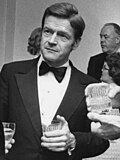 John SilberAlso won Wilbur Cross Medal
About this person
Thomas Eugene Lovejoy III was an American ecologist who was President of the Amazon Biodiversity Center, a Senior Fellow at the United Nations Foundation and a university professor in the Environmental Science and Policy department at George Mason University. Lovejoy was the World Bank's chief biodiversity advisor and the lead specialist for environment for Latin America and the Caribbean as well as senior advisor to the president of the United Nations Foundation. In 2008, he also was the first Biodiversity Chair of the H. John Heinz III Center for Science, Economics and the Environment to 2013. Previously he served as president of the Heinz Center since May 2002. Lovejoy introduced the term biological diversity to the scientific community in 1980. He was a past chair of the Scientific Technical Advisory Panel (STAP) for the Global Environment Facility (GEF), the multibillion-dollar funding mechanism for developing countries in support of their obligations under international environmental conventions.
Text from Wikipedia, CC BY-SA 4.0
 United States
Fame.am measures public visibility signals. It does not measure human value, talent, morality, or credibility.