
Tadeusz Reytan was a nobleman from the Polish-Lithuanian Commonwealth. He was a member of the Sejm of the Polish-Lithuanian Commonwealth from the Nowogródek Voivodeship. Reytan is remembered for a dramatic gesture he made in September 1773, as a deputy of the Partition Sejm.
Also inDeutsch
Photos 4

 Reytan family manor in Hruszówka by Napoleon Orda
 .mw-parser-output cite.citation{font-style:inherit;word-wrap:break-word}.mw-parser-output .citation q{quotes:"\"""\"""'""'"}.mw-parser-output .citation:target{background-color:rgba(0,127,255,0.133)}.mw-parser-output .id-lock-free.id-lock-free a{background:url("//upload.wikimedia.org/wikipedia/commons/6/65/Lock-green.svg")right 0.1em center/9px no-repeat}.mw-parser-output .id-lock-limited.id-lock-limited a,.mw-parser-output .id-lock-registration.id-lock-registration a{background:url("//upload.wikimedia.org/wikipedia/commons/d/d6/Lock-gray-alt-2.svg")right 0.1em center/9px no-repeat}.mw-parser-output .id-lock-subscription.id-lock-subscription a{background:url("//upload.wikimedia.org/wikipedia/commons/a/aa/Lock-red-alt-2.svg")right 0.1em center/9px no-repeat}.mw-parser-output .cs1-ws-icon a{background:url("//upload.wikimedia.org/wikipedia/commons/4/4c/Wikisource-logo.svg")right 0.1em center/12px no-repeat}body:not(.skin-timeless):not(.skin-minerva) .mw-parser-output .id-lock-free a,body:not(.skin-timeless):not(.skin-minerva) .mw-parser-output .id-lock-limited a,body:not(.skin-timeless):not(.skin-minerva) .mw-parser-output .id-lock-registration a,body:not(.skin-timeless):not(.skin-minerva) .mw-parser-output .id-lock-subscription a,body:not(.skin-timeless):not(.skin-minerva) .mw-parser-output .cs1-ws-icon a{background-size:contain;padding:0 1em 0 0}.mw-parser-output .cs1-code{color:inherit;background:inherit;border:none;padding:inherit}.mw-parser-output .cs1-hidden-error{display:none;color:var(--color-error,#bf3c2c)}.mw-parser-output .cs1-visible-error{color:var(--color-error,#bf3c2c)}.mw-parser-output .cs1-maint{display:none;color:#085;margin-left:0.3em}.mw-parser-output .cs1-kern-left{padding-left:0.2em}.mw-parser-output .cs1-kern-right{padding-right:0.2em}.mw-parser-output .citation .mw-selflink{font-weight:inherit}@media screen{.mw-parser-output .cs1-format{font-size:95%}html.skin-theme-clientpref-night .mw-parser-output .cs1-maint{color:#18911f}}@media screen and (prefers-color-scheme:dark){html.skin-theme-clientpref-os .mw-parser-output .cs1-maint{color:#18911f}}Matejko, Jan (1866), Rejtan - The Fall of Poland, Royal Castle in Warsaw{{citation}}: CS1 maint: location missing publisher (link). Rejtan visible on the right.
 Stone in memory of Tadeusz Rejtan. Mausoleum Chapel, Hrushauka, Belarus
In their orbit 3
Politicians born in the 1740s 6
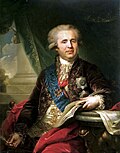


About this person
Tadeusz Reytan was a nobleman from the Polish-Lithuanian Commonwealth. He was a member of the Sejm of the Polish-Lithuanian Commonwealth from the Nowogródek Voivodeship. Reytan is remembered for a dramatic gesture he made in September 1773, as a deputy of the Partition Sejm. There, Reytan tried to prevent the legalization of the first partition of Poland, a scene that has been immortalized in the painting Rejtan by Jan Matejko. He has been the subject of many other art works, and is a symbol of patriotism in Poland, Lithuania and Belarus. Despite his efforts, the partition of Polish-Lithuanian Commonwealth was legalized soon afterwards.
Fame.am measures public visibility signals. It does not measure human value, talent, morality, or credibility.