Sully Prudhomme
French poet, Nobel prize for literature winner 1901 (1839-1907) · France · Writers · Died at 68
Sully Prudhomme is read about 225 times a day, in 98 languages.
A typical day, 30 days to 15 October 2026
The middle day of the days counted, so one week of news cannot move it. The line under it is the last 390 days, one point a day.
Something wrong?He won the first Nobel Prize in Literature ever awarded, in 1901, for verse that tried to marry science with poetry - a project that landed him in history's footnote more than its canon.
A life in dates
Also in Deutsch
Photos 8
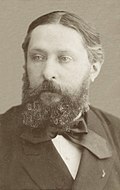
 Sully Prudhomme, René-François-Armand, BNF Gallica
_(monogr.)_-_btv1b10506292g.jpg?width=1200) Désespérance - estampe - GA (George Auriol) (monogr.) - btv1b10506292g
Désespérance - estampe - GA (George Auriol) (monogr.) - btv1b10506292g%2C_Ringling_Museum.jpg?width=1200) French Notables (1889), Ringling Museum
French Notables (1889), Ringling Museum Plaque Sully Prudhomme
 Plaque Sully-Prudhomme - 34 rue Poissonière - 2018 - detail
 Plaque Sully-Prudhomme - 34 rue Poissonière - 2018
 Plaque Sully-Prudhomme
._PH8861.jpg?width=1200) Portrait de René François Armand Sully-Prud'homme (1839-1907). PH8861
Portrait de René François Armand Sully-Prud'homme (1839-1907). PH8861In their own words 10
 ,
, When a woman is truly chaste, she is also incorruptible; I will be less likely to believe in the moral failures of angelic women. (Thursday, October 2, C.E.[1862], p. 51)
He who knows die, has no longer a master.
And you think she's dead? | No. The day I mourned for her, | I did not distinguish funereal hanging drapes | nor did I see a coffin before his door. From
Awards
About this person
Born in Paris on 16 March 1839, René François Armand Prudhomme - "Sully" - trained as an engineer before veering into philosophy and then poetry. He set out to write what he called scientific poetry for the modern age, verse that could hold both precision and feeling. Sincere and melancholic by nature, he moved in the orbit of the Parnassus school but kept his own register. When the Nobel committee launched its literature prize in 1901, they gave it to him first. He died in Paris on 6 September 1907.


Fame.am measures public visibility signals. It does not measure human value, talent, morality, or credibility.