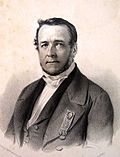
Sébastien L'Aubespine
French diplomat · France · On the map · Politicians · Lived 1518 to 1582 · aged 64
Sébastien de L'Aubespine, abbot of Basse-Fontaine then bishop of Limoges (1518-1582) was a French noble, diplomat and political adviser during the latter Italian Wars and the early French Wars of Religion. Until 1558 he was known as the abbot of Basse-Fontaine, in that year he was elevated to the bishopric of Limoges.
Text from Wikipedia, CC BY-SA 4.0
Sébastien L'Aubespine is read about 2 times a day, in 4 languages.
A typical day, 30 days to 30 October 2026
The middle day of the days counted, so one week of news cannot move it. The line under it is the last 60 days, one point a day.
Something wrong?Media & music
Photos 1

About this person
He began his career as a diplomat during the reign of François I, undertaking negotiations with the Protestant Schmalkaldic League in the hopes of prolonging their war with the Holy Roman Emperor, Charles V. The prospect of an alliance between the Protestant Imperial princes and the French crown was taken up again seriously in 1551 while Basse-Fontaine was serving as French ambassador to the Emperor in Brussels. A crisis between the governor of the Netherlands and the French admiral Annebault would lead to his recall as France and the Empire moved towards war. Having undertaken negotiations in the Swiss cantons, Basse-Fontaine would play an important role in the peace negotiations between France and the Empire in 1556 that produced the truce of Vaucelles. While the truce was in force he served as ambassador in Brussels again. With the attack of admiral Coligny into the Spanish-held Netherlands in 1557, Basse-Fontaine would be put under arrest, forcing him to be traded for the captive Spanish ambassador in France. Limoges would have a key role to play in the 1558-1559 negotiations that culminated in the peace of Cateau-Cambrésis which ended the Italian Wars. Involved in the discussions concerning the location and delegates for the peace, he also participated in the discussions, and was to transmit the king's order to withdraw from the peace before the monarch changed his mind. With the coming of peace he was established in Brussels for a third time.
Text from Wikipedia, CC BY-SA 4.0