
Samuel Barber
✓ Source-basedfallingAmerican composer (1910-1981)
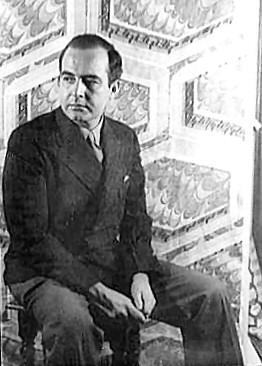
Samuel Osmond Barber II was an American composer, pianist, conductor, baritone, and music educator, and one of the most celebrated composers of the mid-20th century.
Text from Wikipedia, CC BY-SA 4.0
Also inDeutsch
Photos 3
 Childhood home of Samuel Barber in West Chester, Pennsylvania
 Samuel Barber's grave, on the left, at Oaklands Cemetery outside West Chester. The plot on the right had been purchased for Gian Carlo Menotti; as he did not use it, a stone inscribed "To the Memory of Two Friends" was erected there instead.
Listen
SpotifyAwards 9
In their orbit 1
Connected to Samuel 6



About this person
Samuel Osmond Barber II was an American composer, pianist, conductor, baritone, and music educator, and one of the most celebrated composers of the mid-20th century. Principally influenced by nine years' composition studies with Rosario Scalero at the Curtis Institute and more than 25 years' study with his uncle, the composer Sidney Homer, Barber's music usually eschewed the experimental trends of musical modernism in favor of traditional 19th-century harmonic language and formal structure embracing lyricism and emotional expression. However, he adopted elements of modernism after 1940 in some of his compositions, such as an increased use of dissonance and chromaticism in the Cello Concerto (1945) and Medea's Dance of Vengeance (1955); and the use of tonal ambiguity and a narrow use of serialism in his Piano Sonata (1949), Prayers of Kierkegaard (1954), and Nocturne (1959).
Text from Wikipedia, CC BY-SA 4.0
 United States
Fame.am measures public visibility signals. It does not measure human value, talent, morality, or credibility.