
Reinhard Genzel is a German astrophysicist, co-director of the Max Planck Institute for Extraterrestrial Physics, a professor at LMU Munich and an emeritus professor at the University of California, Berkeley.
Also inDeutsch
Photos 2


Awards 22
Connected to Reinhard 6
 Michel MayorAlso won Tycho Brahe Medal
 Jocelyn Bell BurnellAlso won Herschel Medal
 Theodor W. HänschAlso won Stern-Gerlach Medal
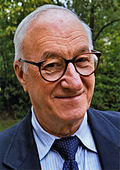 Albert BanduraAlso won honorary doctorate of University Grenoble-Alpes
 Kip S. ThorneAlso won Karl Schwarzschild Medal
 Andrea M. GhezAlso won Newton Lacy Pierce Prize in Astronomy
About this person
Reinhard Genzel is a German astrophysicist, co-director of the Max Planck Institute for Extraterrestrial Physics, a professor at LMU Munich and an emeritus professor at the University of California, Berkeley. He was awarded the 2020 Nobel Prize in Physics "for the discovery of a supermassive compact object at the centre of our galaxy", which he shared with Andrea Ghez and Roger Penrose. In a 2021 interview given to Federal University of Pará in Brazil, Genzel recalls his journey as a physicist; the influence of his father, Ludwig Genzel; his experiences working with Charles H. Townes; and more.
 Germany
Fame.am measures public visibility signals. It does not measure human value, talent, morality, or credibility.