207,380 profiles ranked

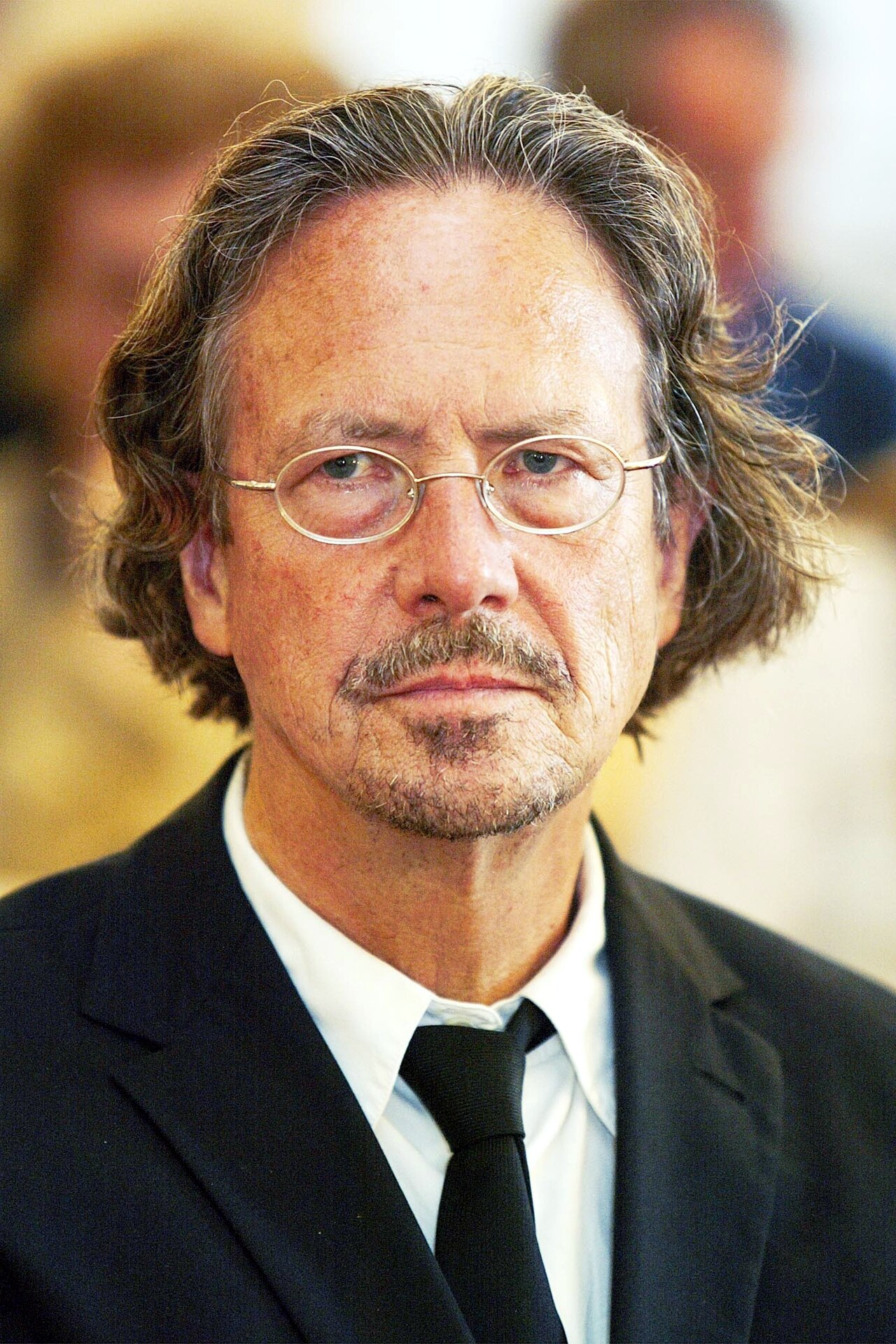
Peter Handke

Austrian writer, playwright and film director (born 1942) · Austria · Writers

Peter Handke is read about 754 times a day, in 80 languages.

A typical day, 30 days to 15 October 2026

The middle day of the days counted, so one week of news cannot move it. The line under it is the last 390 days, one point a day.

Something wrong?
Compare Claim

An Austrian writer who spent decades dismantling the theatre and the novel itself - then blew up his literary standing by returning a major German prize to protest NATO and defending Serbian nationalism through the Yugoslav Wars.

A life in dates

2019Nobel Prize in LiteratureAward2017Honorary Doctorate of the University of AlcalaAward2014Else-Lasker-Schüler-DramatikerpreisAwardInternational Ibsen AwardAward2011Candide PreisAward2008Literature Award of the Bavarian Academy of the Fine ArtsAward2004Siegfried Unseld PreisAward2002America Award in LiteratureAward1988Literaturpreis der Stadt BremenAward1987Grand Austrian State Prize for LiteratureAward1984“A fine thing: suddenly to forget about one’s history, one’s past, to stop feeling that one’s present happiness is endangered by what one used to be.”In their wordsp. 7

“My way of thinking is often so wrong, so untenable, because I think as if I were talking to someone else.”In their wordsp. 9

“I was angry at her for not being what I wanted.”In their wordsp. 14

“Tense, unnerved, and close to madness before writing - and when I read what I’ve written it looks so calm.”In their wordsp. 16

“Proud of my near-madness, as if I had attained a goal.”In their wordsp. 16

1979Franz-Kafka-PreisAward1978Prix Georges-SadoulAward1973Georg Büchner PrizeAward1967Gerhart Hauptmann prizeAward1942Born6 December 1942

Also in Deutsch

Photos 3

In their own words 5
,
Peter Handke
,
5 statements, newest first
  1. A fine thing: suddenly to forget about one’s history, one’s past, to stop feeling that one’s present happiness is endangered by what one used to be.

    1984, p. 7, Own words

  2. My way of thinking is often so wrong, so untenable, because I think as if I were talking to someone else.

    1984, p. 9, Own words

  3. I was angry at her for not being what I wanted.

    1984, p. 14, Own words

Wikiquote, CC BY-SA 4.0

Awards

Nobel Prize in Literature2019
Nestroy theater award/lifetime achievement2018
Honorary Doctorate of the University of Alcala2017
Honorary Citizen of Belgrade2015
International Ibsen Award2014
Else-Lasker-Schüler-Dramatikerpreis2014
Mülheimer Dramatikerpreis2012
Candide Preis2011
Franz Kafka Prize2009
Literature Award of the Bavarian Academy of the Fine Arts2008
Heinrich Heine Prize2006
Siegfried Unseld Preis2004
America Award in Literature2002
Schiller Memorial Prize1995
Literaturpreis der Stadt Bremen1988
Grand Austrian State Prize for Literature1987
Vilenica Prize1987
Franz Nabl Prize1985
Franz-Kafka-Preis1979
Prix Georges-Sadoul1978
Georg Büchner Prize1973
Schillerpreis der Stadt Mannheim1973
Literaturpreis des Landes Steiermark1972
Gerhart Hauptmann prize1967
Honorary Doctorate of Salzburg University
Honorary Doctor of the Catholic University of Eichstätt-Ingolstadt
Order of the Star of Karađorđe
Order of the Republika Srpska

Family

Is this everyone?

Only relatives with a profile here are drawn, so a family can be larger than this. A line here can also be wrong.

Correct this family

About this person

Peter Handke was born 6 December 1942 and rose in the late 1960s as an avant-garde force with plays like Offending the Audience (1966), where actors insulted the crowd and questioned what theatre even was, and Kaspar (1967). His novels - deadpan, ultra-objective accounts of characters in extreme mental states - include The Goalie's Anxiety at the Penalty Kick (1970) and The Left-Handed Woman (1976); after his mother's suicide in 1971, he wrote the novella A Sorrow Beyond Dreams (1972). A recurring obsession: how ordinary language and rational order deaden and distort experience. He co-founded a publishing house, wrote screenplays for Wim Wenders (Wings of Desire, The Wrong Move), and won the Georg Büchner Prize in 1973 - then returned the prize money in 1999 to protest NATO's bombing of Yugoslavia. His public support of Serbian nationalism during and after the Yugoslav Wars brought lasting controversy, but in 2019 the Nobel committee awarded him the prize in literature for work that "with linguistic ingenuity has explored the periphery and the specificity of human experience."

Country
Austria
Category
Writers
Type
Writer / Author
Status
living
Dates
Born 1942 · age 83

Fame.am measures public visibility signals. It does not measure human value, talent, morality, or credibility.