Pär Lagerkvist is read about 218 times a day, in 84 languages.
A typical day, 30 days to 15 October 2026
The middle day of the days counted, so one week of news cannot move it. The line under it is the last 390 days, one point a day.
Something wrong?A Swedish writer who spent fifty years circling the oldest question - good and evil - through the eyes of men history left in the margins: the thief who walked free when Jesus didn't, the Jew cursed to wander forever. He won the Nobel in 1951 for moral weight without doctrine.
A life in dates
Also in Deutsch
Photos 8


Awards
Family
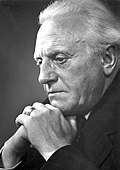 Pär Lagerkvist
Partners
Children

Is this everyone?
Only relatives with a profile here are drawn, so a family can be larger than this. A line here can also be wrong.
Correct this familyAbout this person
Pär Fabian Lagerkvist was born on 23 May 1891 and began writing in his early twenties with an expressive power that would carry him into his late seventies. He worked across poetry, plays, novels, short stories, and essays, all marked by a single preoccupation: the problem of good and evil. He reached for religious figures - Barabbas, freed in place of Christ; Ahasuerus, the Wandering Jew - and stripped them from church doctrine to make them his own moral instruments. The Nobel committee gave him the Literature Prize in 1951. He died on 11 July 1974, having spent a lifetime asking the question he never pretended to answer.


Fame.am measures public visibility signals. It does not measure human value, talent, morality, or credibility.