Michael Porter
American engineer and economist · United States · Academics · Born 1947 · age 79
Michael Porter is read about 409 times a day, in 36 languages.
Counted to 16 September 2026, not since.
The middle day of the days counted, so one week of news cannot move it. The line under it is the last 361 days, one point a day.
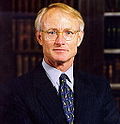
Something wrong?He gave corporate strategy its foundational grammar. Porter's five forces - the framework mapping competitive pressure - turned strategy from executive hunch into teachable discipline, and made him the architect every MBA program still teaches from.
A life in dates
Also in Deutsch
Photos 4


In their own words 10
 ,
, The essence of strategy is choosing what not to do.
There's a fundamental distinction between strategy and operational effectiveness. Strategy is about making choices, trade-offs; it's about deliberately choosing to be different.
The essential complement to the path-breaking book Competitive Strategy, Michael E.
Awards
About this person
Michael Eugene Porter was born May 23, 1947, and built his career at Harvard Business School, where he developed the analytical tools that would define modern strategic management. His five forces analysis became the field's core framework, splitting competitive dynamics into supplier power, buyer power, rivalry, substitutes, and entry barriers - a lens that stuck in both classrooms and boardrooms. He co-founded The Monitor Group, a consulting firm later absorbed by Deloitte, and FSG, focused on social impact. Governments, universities, and NGOs have recognized his work. He is widely considered the father of the modern strategy field and remains one of the most influential voices on management and competitiveness.
Academics from the United States 6


Fame.am measures public visibility signals. It does not measure human value, talent, morality, or credibility.