Lou Andreas-Salomé
German-Russian Psychoanalyst and author · Writers · Lived 1861 to 1937 · aged 75
Lou Andreas-Salomé is read about 934 times a day, in 55 languages.
A typical day, 30 days to 21 October 2026
The middle day of the days counted, so one week of news cannot move it. The line under it is the last 396 days, one point a day.
Something wrong?She moved through the intellectual peaks of late 19th-century Europe as an equal, not a muse - Nietzsche proposed, Rilke orbited, Freud made her a peer in the new science of the mind.
A life in dates
Also in Deutsch
Photos 8


In their own words 10
 ,
, A genuine Nietzsche study would require the psychology of religion that would spotlight the meaning of his being, his suffering, and his self-induced bliss.
Once upon a time, everything was based on trust, free from worry or care; now everything stands in doubt.
Conversing with Nietzsche is uncommonly lovely . . .
In their orbit
 Spouse: Friedrich Carl Andreas
About this person
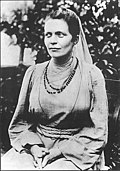
Born in Russia on 12 February 1861 to a French Huguenot-German family, she carried a cosmopolitan restlessness from the start. Her mind pulled her into philosophy first: Friedrich Nietzsche proposed marriage, Paul Rée completed a famous intellectual triangle, and the friction of those years made her a writer. She turned to essays and narrative, then eventually to Sigmund Freud and psychoanalysis, becoming a practitioner in her own right. Rainer Maria Rilke was another chapter - poet, lover, correspondent. She died on 5 February 1937, having crossed more borders and disciplines than most people meet in a lifetime.




Fame.am measures public visibility signals. It does not measure human value, talent, morality, or credibility.