
Liu Shaoqi
✓ Source-basedstable2nd President of the People's Republic of China (1898-1969)
 in China
He was publicly named Mao's successor, rose to the presidency of China, then disappeared. Mao turned on him during the Cultural Revolution, branded him the "commander of China's bourgeoisie headquarters," and locked him away until he died in prison.
Also inDeutsch
Photos 8
.jpg?width=1200)


In their own words 10
We should regard the cities and villages as an integral whole.
"Some Questions Concerning Urban Work" (12 March 1949)
You are advancing under complex conditions, with complicated tasks and duties to perform.
"Some Opinions Concerning Our Work in Central China" (18 June 1943)
We Communists are the most advanced revolutionaries in modern history; to day the changing of society and the world rests upon us and we are the driving force in this change.
"How to Be a Good Communist - 1. Why Communists Must Undertake Self Cultivation" (July 1939)
In their orbit 7


Politicians from China 6

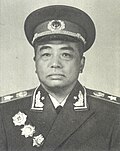


About this person
Liu Shaoqi came up through the labor movement in the 1920s, working underground for the CCP in Shanghai and the northeast before joining the Long March. He spent the war years organizing anti-Japanese resistance in North China and leading the New Fourth Army as political commissar after 1941. When the People's Republic was proclaimed in 1949, he climbed steadily - chairman of the National People's Congress Standing Committee in 1954, then president in 1959, steering economic reconstruction after the disasters of the Great Leap Forward at the Seven Thousand Cadres Conference in 1962. In 1961 Mao publicly anointed him as heir. Five years later Mao purged him, denounced him as China's foremost "capitalist roader" and a traitor, placed him under house arrest in 1967, and left him to die in prison in 1969 from untreated diabetes. Deng Xiaoping rehabilitated him in 1980.
ChinaFame.am measures public visibility signals. It does not measure human value, talent, morality, or credibility.