
László Sáry is a Hungarian composer and music educator, founding member of Új Zenei Stúdió, brother of composer József Sári. He studied with Endre Szervánszky at the Liszt Academy of Music, Budapest (1961-6). His early works show the strong influence of Bartók.
Also inDeutsch
Photos 1

Awards 3
Connected to László 6

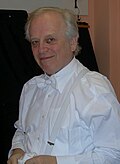


About this person
László Sáry is a Hungarian composer and music educator, founding member of Új Zenei Stúdió, brother of composer József Sári. He studied with Endre Szervánszky at the Liszt Academy of Music, Budapest (1961-6). His early works show the strong influence of Bartók. In ensuing years, acquaintance with the music of Boulez and Stockhausen stimulated a change in his style. The experimental ideas he developed with Új Zenei Stúdió, which he co-founded in 1970 with Zoltán Jeney and László Vidovszky, among others), led to group improvisation and collective compositions, of which Pentagram (1982) is an adaptation. His encounter with Christian Wolff at Darmstadt in 1972 led him to diverge further from traditional Western European styles. Much of his music of the 1970s and 80s employs repetitive patterns, such as chordal sequences, groups of scales or small sets of pitches. His interest in electronics and musique concrète led to Studies for Steam Engines, which won third prize in the seventh International Rostrum of Electroacoustic Music (1998).
Fame.am measures public visibility signals. It does not measure human value, talent, morality, or credibility.