Karl Friedrich Schinkel
Prussian architect, city planner and painter (1781-1841) · Germany · Architects · Died at 60
Karl Friedrich Schinkel is read about 330 times a day, in 63 languages.
A typical day, 30 days to 8 October 2026
The middle day of the days counted, so one week of news cannot move it. The line under it is the last 76 days, one point a day.
Something wrong?He gave Berlin its face. Schinkel turned Prussia's capital into a neoclassical stage set in stone, and his Altes Museum became the template every national gallery since has quietly copied.
Also in Deutsch
Photos 8
 Schinkel1
 Berlin-Mitte, Unter den Linden, Prinzessinnen-Palais, Säulensaal des Schinkel-Museums
 Friedrichwerdersche Kirche Grundriss
 FriedrKirche Tuerrelief 2
 G-Abb037-Landhaus-Behrend-Wartenberg Schinkel
 Gebhard Leberecht, vorst Blucher von Wahlstatt, NG-VG-1-3342
 Gebhard Leberecht, vorst Blucher von Wahlstatt, penning door de burgers van Berlijn vereerd, NG-VG-1-3366
 Gedenkstein Karl Friedrich Schinkel
Awards
Family

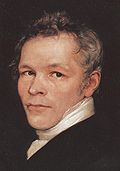 Karl Friedrich Schinkel
Partners

Is this everyone?
Only relatives with a profile here are drawn, so a family can be larger than this. A line here can also be wrong.
Correct this familyAbout this person
Karl Friedrich Schinkel was born on 13 March 1781 in Prussia and trained as an architect, painter, and designer across disciplines - furniture, stage sets, city plans. He rose to lead both the Neoclassical and Gothic Revival movements in nineteenth-century Germany, shaping Berlin's streets and skyline with a precision that made him one of the greatest architects his country produced. His Altes Museum stands as one of Europe's most important classical buildings, a prototype that national art museums worldwide would follow. The Bauakademie, another of his Berlin works, is considered a forerunner of modern architecture itself. Schinkel died on 9 October 1841, leaving a city remade in his image.
Architects from Germany 6



Fame.am measures public visibility signals. It does not measure human value, talent, morality, or credibility.