Karel Čapek is read about 700 times a day, in 83 languages.
A typical day, 30 days to 23 October 2026
The middle day of the days counted, so one week of news cannot move it. The line under it is the last 398 days, one point a day.
Something wrong?He gave the world the word "robot" in a 1920 play about manufactured workers, then spent the rest of his life warning against the ideologies that would mechanize human beings in earnest.
A life in dates
Also in Deutsch
Photos 8
 Karel Čapek podepisuje první výtisky Povětroně, Pestrý týden 27.1.1934
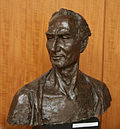
 111103 Karel Capek Galerie Deset CSF 0002
 111103 Karel Capek Galerie Deset CSF 0003
 111103 Karel Capek Galerie Deset CSF 0004
 111103 Karel Capek Galerie Deset CSF 0005
 111103 Karel Capek Galerie Deset CSF 0007
 111103 Karel Capek Galerie Deset CSF 0009
 111103 Karel Capek Galerie Deset CSF 0010
In their own words 10
 ,
, I don’t know whether we have souls or not; but there are immortal things within us, and one of them is this instinctive desire for justice.
Look, justice has to be as unquestioned as the multiplication tables.
Great god of the Ants, thou hast granted victory to thy servants. I appoint thee honorary Colonel.
Awards
Family
 Karel Čapek
Partners

Brothers and sisters


Is this everyone?
Only relatives with a profile here are drawn, so a family can be larger than this. A line here can also be wrong.
Correct this familyAbout this person
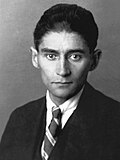
Karel Čapek was born in Bohemia on 9 January 1890 and became a Czech writer, playwright, critic and journalist shaped by American pragmatic liberalism. His 1920 play R.U.R. (Rossum's Universal Robots) introduced "robot" to global vocabulary, and his 1936 novel War with the Newts extended his science fiction into darker territory. He campaigned for free expression and opposed both fascism and communism as they rose across Europe, writing politically charged works that addressed the social turmoil directly. Nominated for the Nobel Prize in Literature seven times, he never received it, though the Karel Čapek Prize now honors writers who reinforce democratic and humanist values, and he helped establish the Czechoslovak PEN Club as part of International PEN. He died on 25 December 1938 from a lifelong medical condition, just as the war he'd seen coming arrived, and his literary reputation solidified only after Europe emerged from the rubble.



Fame.am measures public visibility signals. It does not measure human value, talent, morality, or credibility.