Kālidāsa
A classical Sanskrit writer widely regarded as the greatest poet and dramatist of ancient India. · Writers
Kālidāsa is read about 580 times a day, in 148 languages.
A typical day, 30 days to 15 October 2026
The middle day of the days counted, so one week of news cannot move it. The line under it is the last 390 days, one point a day.
Something wrong?The Sanskrit poet whose plays and verse became the gold standard for classical Indian literature - despite leaving almost nothing behind about his own life except the work itself.
A life in dates
Also in Deutsch
Photos 8

.jpg?width=1200)


In their own words 10
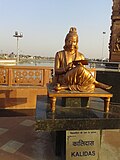 ,
, Did the great Creator first draw her in a masterpiece, / And then touch life into his art? / Or did he make her in his mind alone, / Drawing on beauty’s every part?
A blossom yet unsmelt, / A tender shoot unpinched, / A gem uncut, / Untasted, fresh-fermented honey-wine, / The fruit of proper actions / Still intact -
What is intended to be said, if left unsaid, becomes a matter of regret later.
About this person
Kālidāsa lived sometime in the 4th or 5th century CE, likely during the Gupta era, but his biography is a void: no firm dates, no clear patron, nothing but inference drawn from the texts themselves. What survived are three plays, two epic poems, and two shorter pieces, all rooted in Hindu Puranas and philosophy. The precision of his craft and the depth of his dramatic and lyric range secured his reputation as ancient India's greatest playwright and poet. Centuries later, scholars still argue over when exactly he lived, while his verses remain fixed points in the Sanskrit canon.
In common with Kālidāsa

Fame.am measures public visibility signals. It does not measure human value, talent, morality, or credibility.