She turned confession into architecture - songs that mapped longing and disillusion in tunings no one else used, with melodies that drifted like overheard thoughts. Blue still lands like a nerve exposed.
A life in dates
Also in Deutsch
Photos 11

 A plaque along the South Saskatchewan River in Saskatoon commemorates her upbringing in the city and the waterway's inspiration for her 1971 song "River".
 A plaque (on sidewalk, right) in Saskatoon commemorates the spot on Broadway Avenue where she made her first professional performance in 1962 at the Louis Riel coffeehouse.
 Laurel Canyon, 8217 Lookout Mountain Avenue, Joni Mitchell's house from 1969 to 1974; photograph taken in 2022
 Mitchell performing at the Anaheim Convention Center in 1974
 Mitchell in 1975
 Mitchell performing in 1983
 Mitchell pets President Clinton's dog Buddy in the Oval Office in 1998
In their own words 10
 ,
(Do you ever make yourself cry when you write?) No, never. I’m not a weeper. I’m a snarler. I just put all the weeping in the words. The words are the weeping.
Truth and beauty. That’s what I hope to deliver.
I've always been a painter. I didn't come to it late. I was always the school artist. I came to music late, you know, relatively. I mean, I picked up - I tried it at 8.
Listen
SpotifyOn YouTube
10.3K subscribersAwards
In their orbit
 Spouse: Larry Klein
About this person
Roberta Joan Anderson started in Saskatoon nightclubs, drifted through Toronto, then crossed into the States in 1965. Other singers recorded her songs first - "Both Sides, Now", "Chelsea Morning" - which opened the door to Reprise and her 1968 debut, Song to a Seagull. She settled in Southern California and wrote "Big Yellow Taxi" and "Woodstock" in 1970, but it was 1971's Blue that became a landmark: Rolling Stone later ranked it the third greatest album ever made, and NPR called it the greatest album made by a woman. By 1974's Court and Spark she was pulling in jazz players and radio hits, her voice dropping from mezzo-soprano to contralto, her open tunings growing knotted and strange - she worked with Jaco Pastorius, Wayne Shorter, Herbie Hancock, and Charles Mingus before he died. She designed her own covers, called herself a painter derailed by circumstance, released her last album of new songs in 2007, and stepped back. A brain aneurysm in 2015 nearly ended it, but she surfaced again in 2021, took a Kennedy Center Honor, and walked onstage unannounced at Newport in 2022 - still here, still performing.
In common with Joni
 Patti SmithAlso in Rolling Thunder Revue: A Bob Dylan Story by Martin Scorsese (2019)
 Joan BaezAlso in Rolling Thunder Revue: A Bob Dylan Story by Martin Scorsese (2019)
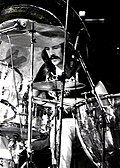 John BonhamAlso in Joni Mitchell: Shadows and Light (1980)
 Mai ZetterlingAlso in Love (1982)
 Sharon StoneAlso in Rolling Thunder Revue: A Bob Dylan Story by Martin Scorsese (2019)
 Edna O'BrienAlso in Love (1982)
Fame.am measures public visibility signals. It does not measure human value, talent, morality, or credibility.