Jonathan Jennings
American politician (1784-1834) · United States · On the map · Politicians · Died at 50
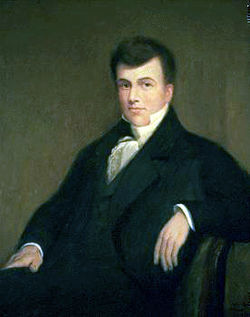
Jonathan Jennings was an American politician who was the first elected governor of Indiana. He was elected nine times to the United States House of Representatives from Indiana's at large and 2nd congressional districts.
Jonathan Jennings is read about 17 times a day, in 11 languages.
A typical day, 30 days to 9 July 2026
The middle day of the days counted, so one week of news cannot move it. The line under it is the last 60 days, one point a day.
Something wrong?People around Jonathan
Close ties

Also in Deutsch
Media & music


About this person
Born in either Hunterdon County, New Jersey, or Rockbridge County, Virginia, he studied law before migrating to the Indiana Territory in 1806. Jennings initially intended to practice law, but took jobs as an assistant at the federal land office at Vincennes and assistant to the clerk of the territorial legislature to support himself and pursued interests in land speculation and politics. In 1808 Jennings moved to the eastern part of the Indiana Territory and settled near Charlestown, in Clark County. In Charleston, he soon emerged as a leading opponent of the territorial governor, William Henry Harrison. He was elected as the Indiana Territory's delegate to the U.S. House of Representatives by dividing the pro-Harrison supporters and running as an anti-Harrison candidate. By 1812, he was the leader of the anti-slavery and pro-statehood faction of the territorial government. Jennings and his political allies took control of the territorial assembly and dominated governmental affairs after the resignation of Governor Harrison in 1812. As a congressional delegate Jennings aided passage of the Enabling Act in 1816, which authorized the organization of Indiana's state government and state constitution. He was elected president of the Indiana constitutional convention, held in Corydon in June 1816, where he helped draft the state's first constitution. Jennings supported the effort to ban slavery in the state and favored a strong legislative branch of government.


