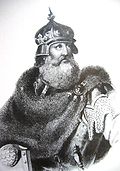
John VI Kantakouzenos
Byzantine emperor from 1347 to 1354 (1292-1383) · Historical Figures · Died at 91
John VI Kantakouzenos is read about 238 times a day, in 51 languages.
Counted to 17 September 2026, not since.
The middle day of the days counted, so one week of news cannot move it. The line under it is the last 60 days, one point a day.
Something wrong?He won the throne through two civil wars, lost most of what remained of Byzantium's Balkan territories, handed the Ottomans their first foothold in Europe at Gallipoli, then got deposed by the boy he'd been regent for and spent three decades writing history in a monastery.
Also in Deutsch
Photos 8


In their own words 1
 ,
There is nothing more conducive to the destruction of a nation, whether it be republic or monarchy, than the lack of men of wisdom or intellect.
Family
John VI KantakouzenosPartners
Children

Is this everyone?
Only relatives with a profile here are drawn, so a family can be larger than this. A line here can also be wrong.
Correct this familyAbout this person
John VI Kantakouzenos served as grand domestic under Andronikos III Palaiologos and regent for the young John V Palaiologos before seizing the Byzantine throne for himself in 1347. His path to power required two ruinous civil wars that bled away much of the empire's remaining Balkan territory to the Serbs and Bulgarians, but the catastrophic loss was Gallipoli - ceded to the Ottoman Turks during the conflict, it became their gateway into Europe. By 1354 his former ward had grown up and forced him out. He retired to a monastery under the name Joasaph Christodoulos and turned historian, recording the empire whose collapse he'd accelerated. He died in 1383 at 90 or 91, the longest-lived Roman emperor on record.
Historical Figures born in the 1290s 6



Fame.am measures public visibility signals. It does not measure human value, talent, morality, or credibility.