John Keats
English Romantic poet (1795-1821) · United Kingdom · Writers · Died at 25
John Keats is read about 1,622 times a day, in 97 languages.
A typical day, 30 days to 15 October 2026
The middle day of the days counted, so one week of news cannot move it. The line under it is the last 390 days, one point a day.
Something wrong?He died at 25 with barely four years of published work behind him, indifferently received. Then the century turned him into a cornerstone of English literature - the odes, the letters, the sensualities compressed into lines that poets have been measuring themselves against ever since.
A life in dates
Also in Deutsch
Photos 8
 John Keats by William Hilton circa 1822 02
.jpg?width=1200) 140807 Teignmouth Keats House , (40395544103)
140807 Teignmouth Keats House , (40395544103).jpg?width=1200) Image taken from page 487 of 'Old and New London, etc' (11190269326)
Image taken from page 487 of 'Old and New London, etc' (11190269326) A Day with Keats, Neatby plate - Autumn
 A Thing of Beauty is a Joy Forever
 Anne Whitney, John Keats
 Article-2119109-124A3DF2000005DC-683 634x335
 Charles Lamb&John Keats
In their own words 10
 ,
, To his sight / The husk of natural objects opens quite / To the core; and every secret essence there / Reveals the elements of good and fair;
Here lies one whose name was writ in water.
My chest of books divide amongst my friends.
In their orbit 2

About this person
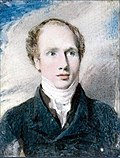
John Keats was born 31 October 1795 and died of tuberculosis 23 February 1821, his poems in print less than four years. The work arrived to shrugs. But after his death, the reputation caught fire: by century's end, the Encyclopædia Britannica called "Ode to a Nightingale" one of the final masterpieces, and he'd been locked into the canon. The style was Romantic in full - extreme emotion through natural imagery, heavily loaded with sensualities - and the odes, the sonnets like "On First Looking into Chapman's Homer", the medievalist pieces "La Belle Dame sans Merci" and "The Eve of St. Agnes" became a engine for the Pre-Raphaelites, shaping Rossetti, Swinburne, Morris. Jorge Luis Borges said reading Keats the first time was an experience he felt all his life.
Writers from the United Kingdom 6


Fame.am measures public visibility signals. It does not measure human value, talent, morality, or credibility.