Jerzy Vetulani
Polish pharmacologist and neuroscientist (1936-2017) · Poland · On the map · Scientists · Died at 81
Jerzy Adam Gracjan Vetulani was a Polish neuroscientist, psychopharmacologist and biochemist, professor of natural sciences, member of the Polish Academy of Sciences and the Polish Academy of Learning, between 1956 and 2017 employee at the Institute of Pharmacology of the Polish Academy of Sciences in Kraków, where he...
Jerzy Vetulani is read about 54 times a day, in 13 languages.
A typical day, 30 days to 10 October 2026
The middle day of the days counted, so one week of news cannot move it. The line under it is the last 120 days, one point a day.
Something wrong?A life in dates
People around Jerzy

Parents


 Jerzy Vetulani
Partners
Brothers and sisters
Is this everyone?
Only relatives with a profile here are drawn, so a family can be larger than this. A line here can also be wrong. A marriage is drawn as ended only where its end is recorded, so a spouse drawn here may be a former one.
Correct this familyMedia & music
Photos 8

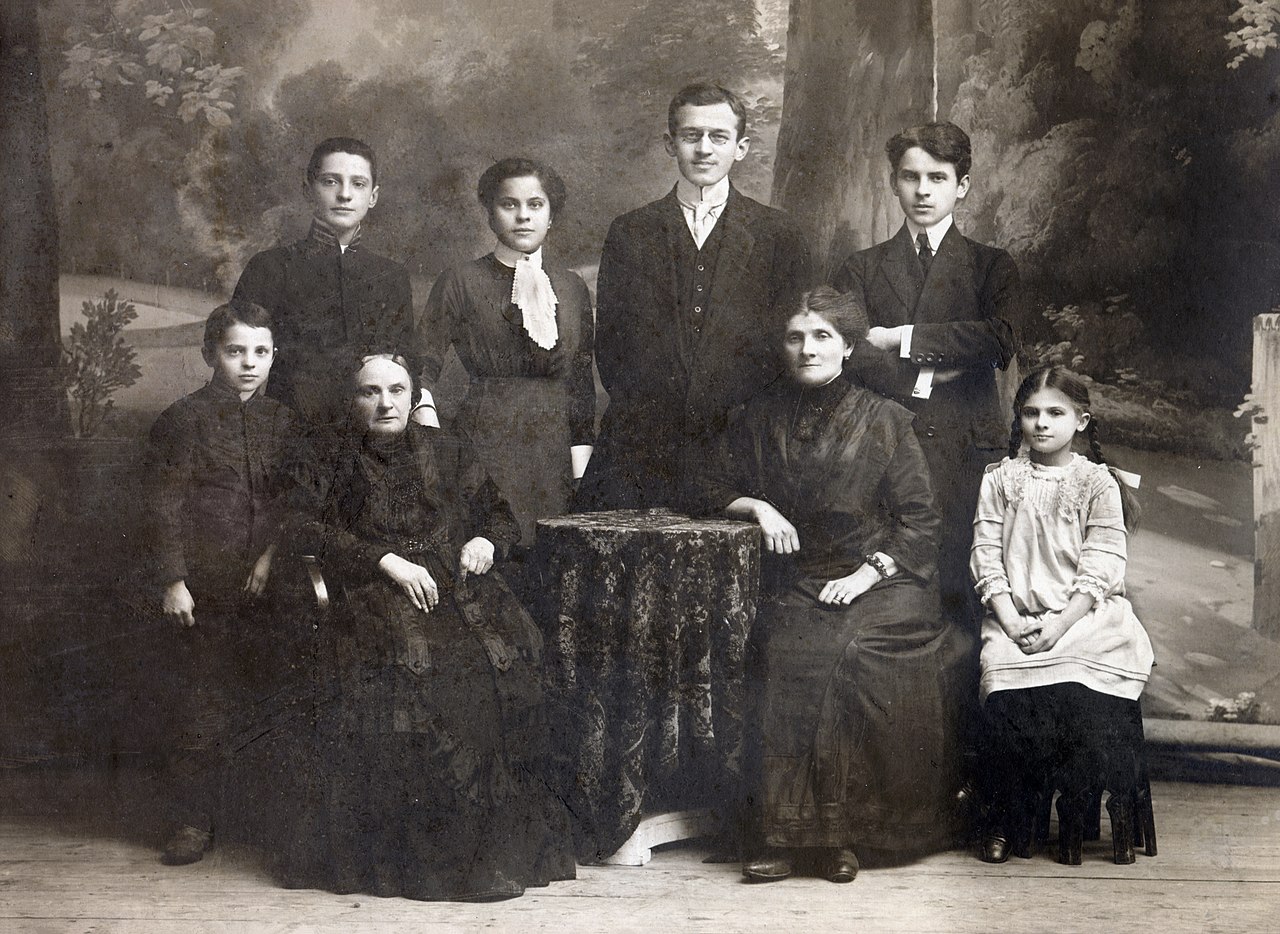 Adam Vetulani, first to the left, with his grandmother, mother and siblings, c. 1910
 Jerzy Vetulani with his mother Irena Latinik-Vetulani, 1938
 Jerzy Vetulani with his father Adam Vetulani, c. 1939
 Jerzy Vetulani in the 1960s
 Jerzy Vetulani at TEDxKraków, 2011
 Jerzy Vetulani in Gorlice, 2013
 The grave of Jerzy and Maria Vetulani at the Rakowicki Cemetery in Kraków
Awards
About this person
Jerzy Adam Gracjan Vetulani was a Polish neuroscientist, psychopharmacologist and biochemist, professor of natural sciences, member of the Polish Academy of Sciences and the Polish Academy of Learning, between 1956 and 2017 employee at the Institute of Pharmacology of the Polish Academy of Sciences in Kraków, where he was head of the Department of Biochemistry (1976-2006), deputy director for Science Affairs (1994-2002) and vice chairman of the Scientific Council (2003-2017). He published more than 240 original research papers in peer-review journals. While a Research Associate Professor at the Vanderbilt University, together with Fridolin Sulser in 1975 he formulated an early hypothesis of the mechanism of action of antidepressant drugs, suggesting that downregulation of beta-adrenergic receptors is responsible for their effects. In 1983, he received Anna-Monika Prize for research on the mechanisms of the electroconvulsive therapy. Beside depression, his research interests included memory, addiction and neurodegeneration. According to Andrzej Pilc, he was one of the most frequently cited Polish scientists in the field of biomedicine between 1965 and 2001.