Jean Cocteau is read about 1,985 times a day, in 86 languages.
A typical day, 30 days to 22 October 2026
The middle day of the days counted, so one week of news cannot move it. The line under it is the last 397 days, one point a day.
Something wrong?He wrote novels, directed films, drew, designed, and staged plays - yet insisted he was only ever a poet, just working in different rooms.
A life in dates
Also in Deutsch
Photos 7
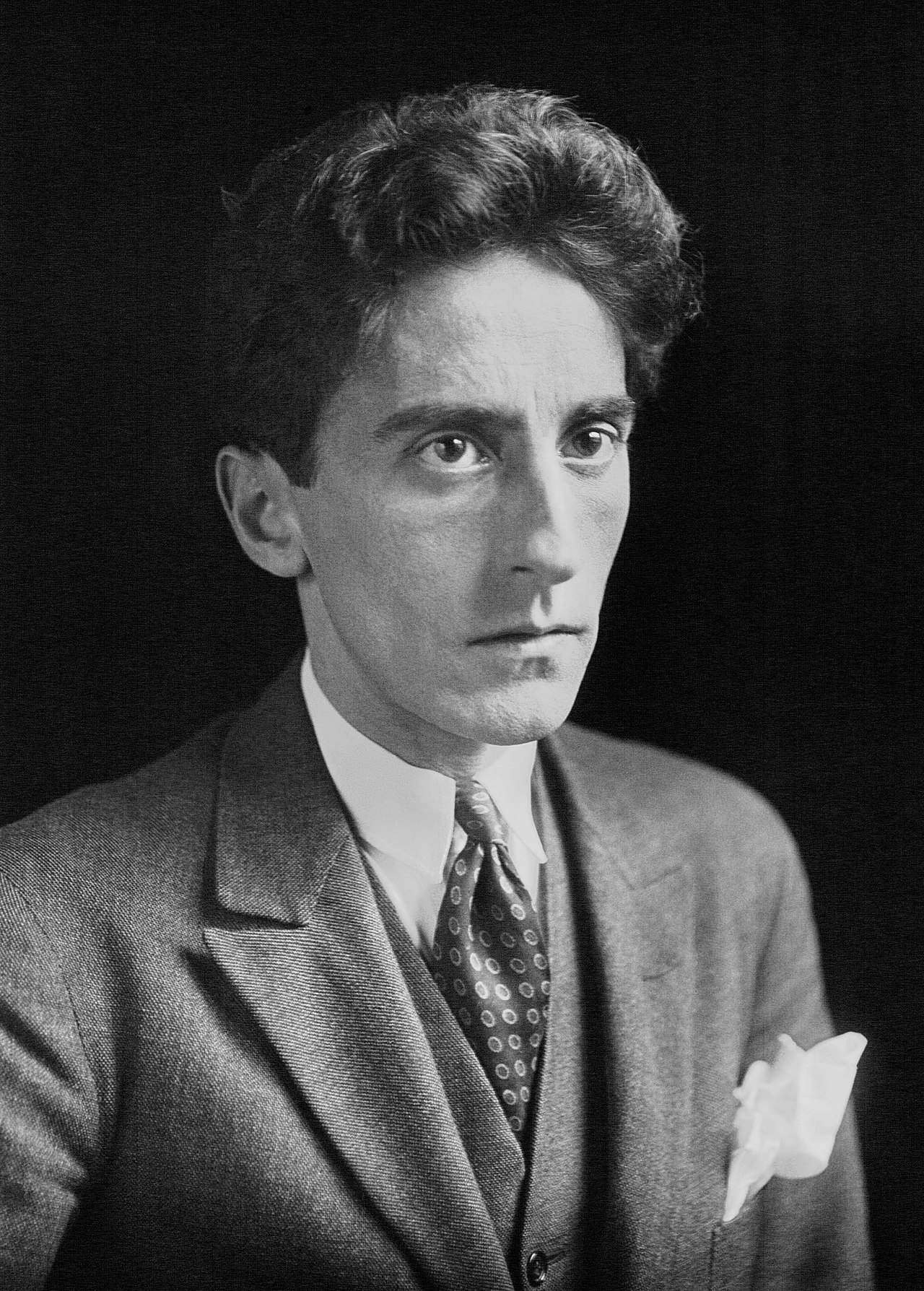

 Amedeo Modigliani, Jean Cocteau, 1916, Henry and Rose Pearlman Collection, on long-term loan to the Princeton University Art Museum
 A portrait of Cocteau by Federico de Madrazo y Ochoa, c. 1910-1912
 Érik Satie's Parade, ballet on a scenario by Cocteau
 Tribute to René Clair: I Married a Witch, Cocteau's 1945 set design for the Théâtre de la Mode
 Cocteau directing Beauty and the Beast (1946)
In their own words 10
 ,
, One of the characteristics of the dream is that nothing surprises us in it. With no regret, we agree to live in it with strangers, completely cut off from our habits and friends.
What is line? It is life. A line must live at each point along its course in such a way that the artist’s presence makes itself felt above that of the model...
Mystery has its own mysteries, and there are gods above gods. We have ours, they have theirs. That is what’s known as infinity.
Awards
In their orbit
About this person
Born July 1889, Jean Maurice Eugène Clément Cocteau spent the first half of the 20th century proving a single artist could work everywhere at once. Novels arrived first - Le Grand Écart in 1923, Le Livre blanc in 1928, Les Enfants Terribles in 1929 - then plays including La Voix Humaine in 1930 and La Machine Infernale four years later. By then he'd already made The Blood of a Poet, the 1930 film that opened what became his Orphic Trilogy, completed three decades later with Orpheus and Testament of Orpheus. In between came Beauty and the Beast in 1946 and a screen adaptation of his own Les Parents terribles two years after that. He called it all poetry - poésie cinématographique, poésie graphique, poésie de théâtre - a classification that mattered more to him than any label the avant-garde tried to pin on. He died in October 1963, having left a body of work unequalled for its variety of artistic expression.
In common with Jean




Fame.am measures public visibility signals. It does not measure human value, talent, morality, or credibility.