Isaac Bashevis Singer
Polish-American writer (1904-1991) · United States · Writers · Died at 87 · also Poland · also Russia
Isaac Bashevis Singer is read about 633 times a day, in 91 languages.
A typical day, 30 days to 15 October 2026
The middle day of the days counted, so one week of news cannot move it. The line under it is the last 390 days, one point a day.
Something wrong?He wrote in a language the world was forgetting and won the Nobel Prize anyway. Singer's Yiddish fiction - demons, desire, shtetl life rendered unsentimental and strange - reached readers who couldn't read the original, because he translated himself into English and refused to let the tradition die polite.
A life in dates
Also in Deutsch
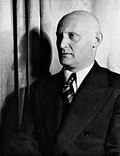
Photos 8
 Dan Hadani collection (990044399930205171) (cropped)
 Dan Hadani collection (990044399890205171)
 Dan Hadani collection (990044399900205171)
 Dan Hadani collection (990044399910205171) (cropped)
 Dan Hadani collection (990044399910205171)
 Dan Hadani collection (990044399930205171)
 Dan Hadani collection (990044399940205171)
 IreneLieblichandIsaacBSinger
In their own words 10
 ,
Doubt is part of all religion. All the religious thinkers were doubters.
I don't invent characters because the Almightly has already invented millions… Just like experts at fingerprints do not create fingerprints but learn how to read them.
The analysis of character is the highest human entertainment.
Awards
Family
Isaac Bashevis SingerPartners
Brothers and sisters

Is this everyone?
Only relatives with a profile here are drawn, so a family can be larger than this. A line here can also be wrong.
Correct this familyAbout this person
Born in Poland in 1903, Singer published first in Yiddish, carrying a literary tradition most assumed was fading. He moved to the United States and began translating his own novels and stories into English with collaborators, reaching audiences far beyond Yiddish readership. In 1970 his memoir A Day of Pleasure: Stories of a Boy Growing Up in Warsaw won a National Book Award in Children's Literature; in 1974 his story collection A Crown of Feathers won in Fiction. The Nobel Prize followed in 1978. Some works made it to the stage. He died in July 1991, having spent decades proving a minority language could command a major literature.
In common with Isaac


Fame.am measures public visibility signals. It does not measure human value, talent, morality, or credibility.