
He explained why charged particles moving through certain materials emit that eerie blue glow - the phenomenon that now bears Cherenkov's name but earned Frank a share of the Nobel.
Text from Wikipedia, CC BY-SA 4.0
Also inDeutsch
Photos 4


Awards 16
In their orbit 2
Connected to Ilya 6
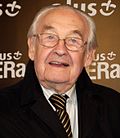 Andrzej WajdaAlso won honorary doctor of the University of Łódź
 Nikolay Gennadiyevich BasovAlso won Order of Cyril and Methodius
 Yury LuzhkovAlso won Order of the Polar Star
 Nikita MikhalkovAlso won Friendship Order
 Joseph KobzonAlso won Friendship Order
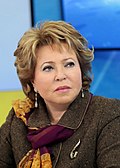 Valentina MatviyenkoAlso won Order of the Polar Star
About this person
Ilya Mikhailovich Frank was born on 23 October 1908 in the waning years of the Russian Empire. Working alongside Pavel Cherenkov and Igor Tamm, he built the theoretical framework that made sense of Cherenkov radiation - the light emitted when particles exceed the speed of light in a given medium. The three Soviet physicists shared the 1958 Nobel Prize in Physics for the work. Frank collected Stalin Prizes in 1946 and 1953, and a USSR State Prize in 1971. He died on 22 June 1990, having spent his career turning strange optical effects into rigorous physics.
Text from Wikipedia, CC BY-SA 4.0
Fame.am measures public visibility signals. It does not measure human value, talent, morality, or credibility.