Ibn Taymiyyah is read about 1,395 times a day, in 66 languages.
A typical day, 30 days to 15 October 2026
The middle day of the days counted, so one week of news cannot move it. The line under it is the last 390 days, one point a day.
Something wrong?A medieval jurist whose legal rulings sat dormant for centuries, then became the most cited scholar in modern jihadist literature - not because he was violent, but because he wrote one thing almost no one else had: that a ruler who claims Islam but governs unjustly can be fought.
Also in Deutsch
Photos 8


In their own words 10
 ,
Better a century of tyranny than one day of chaos.
God does not create pure evil. Rather, in everything that He creates is a wise purpose by virtue of what is good.
If God - exalted is He - is Creator of everything, He creates good and evil on account of the wise purpose that He has in that by virtue of which His action is good and perfect.
Family
Parents
Ibn TaymiyyahIs this everyone?
Only relatives with a profile here are drawn, so a family can be larger than this. A line here can also be wrong.
Correct this familyAbout this person
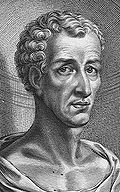
Born in Harran in 1263 and displaced by the Mongol invasion, Ibn Taymiyyah learned Islamic jurisprudence in Damascus and quickly became the most combative scholar of his age. He fought personally in campaigns against the Shias of Kisrawan, whom he accused of aiding Crusaders and Mongols, and issued rulings condemning tomb visitation and practices he saw as corrupting Sunni orthodoxy. His insistence that reason and revelation aligned, and his rejection of dominant theological schools, earned him repeated imprisonment and the censoring of his works. He died in a Damascus prison in 1328, dismissed by many contemporaries as an extremist. Centuries later, his treatises resurfaced as the intellectual backbone of Wahhabism, Salafi jihadism, and movements from the Muslim Brotherhood to al-Qaeda - all seizing on his doctrine that faith without righteous rule is no shield from rebellion.



Fame.am measures public visibility signals. It does not measure human value, talent, morality, or credibility.